

Bulk SMS for Hospitals and Healthcare Providers Appointment & Lab Report Alerts India
Automate appointment reminders, lab report ready alerts, OPD token updates, and medicine refill reminders with DLT-compliant bulk SMS built for Indian hospitals and clinics. Get Click Media connects bulk SMS to your HMS and lab systems so every patient gets a timely alert, without a call or an app in the way.
TRAI DLT registered · HMS & LIS integration · Secure report-link delivery · 99.9% uptime
99.9%
SMS delivery uptime
14%
Average OPD no-show rate (post-SMS)
81%
Chronic-care refill adherence rate
₹0.09
Starting price per SMS
Trusted by 10,000+ businesses across India


















Bulk SMS for Hospitals & Healthcare
An effective SMS workflow begins with the customer moment: what triggered the message, who should receive it, what action they need to take, and how the business will handle delivery failures, customer replies, or requests that need human follow-up.
Why Hospitals in India Need Bulk SMS
The strongest implementations avoid treating every customer the same way. Segmenting messages by lifecycle stage, location, service status, account state, order status, appointment timing, or other relevant industry context can help make communication more useful and reduce unnecessary outreach.
One dashboard for appointments, reports and refill reminders
Manage every patient touchpoint- appointment reminders, lab report alerts, OPD queue updates, and refill nudges- from a single SMS dashboard connected to your hospital management system.
- Triggered SMS from HMS appointment changes
- Report-ready alerts with secure portal link
- Chronic-care refill reminder scheduling
- Real-time delivery and read-rate reports
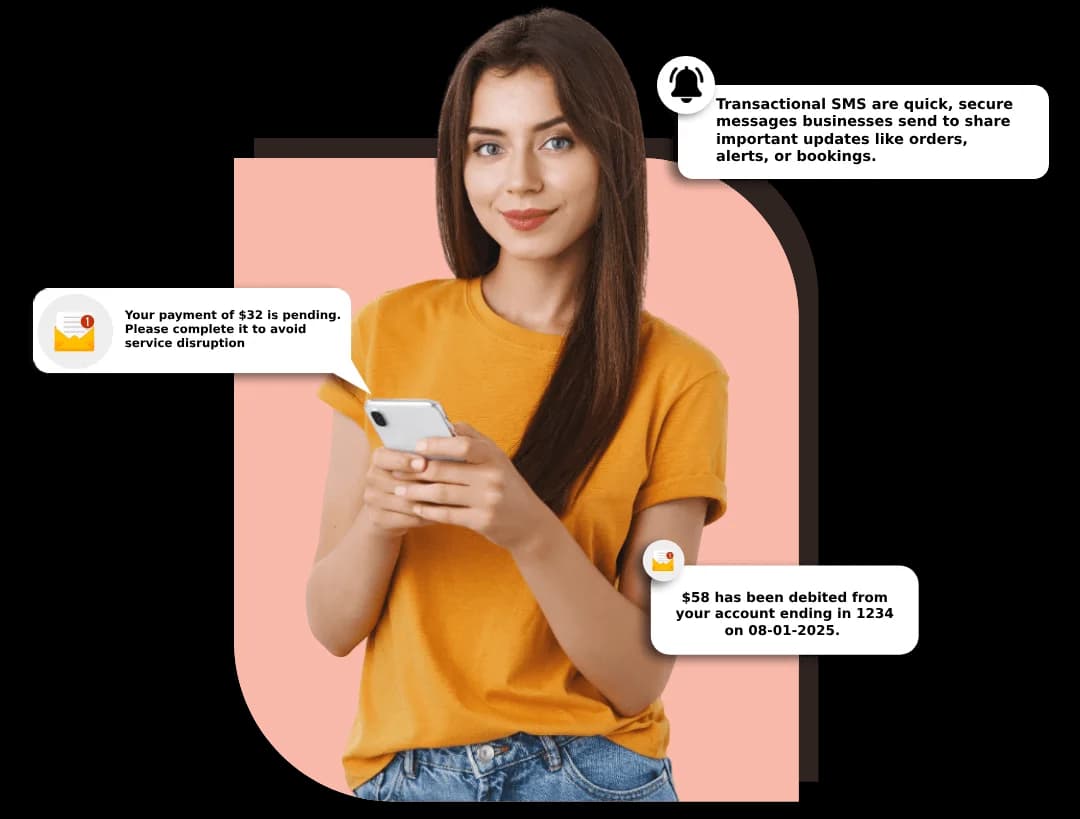
A 2-message sequence that keeps OPD slots full
Every booked appointment triggers a day-before reminder and an hours-before nudge with doctor name, room number, and a reschedule link- cutting no-shows without adding staff workload.
- Day-before reminder with appointment details
- Hours-before final nudge
- One-tap reschedule link
- Automatic waitlist alert on cancellation
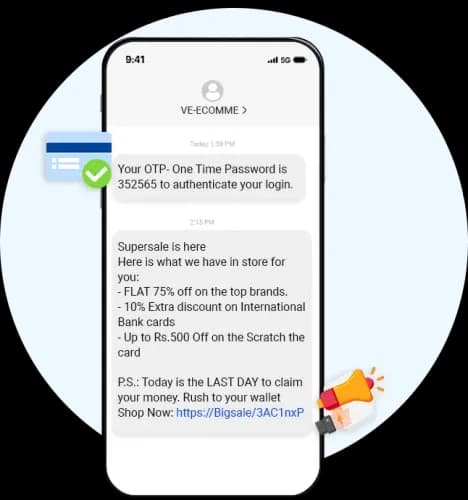
Bulk SMS Use Cases for Hospitals- 6 Automations
These examples show common message triggers, message purposes, and operational goals for hospitals & healthcare organizations. Each workflow should be adjusted to the organization's customer lifecycle, consent position, service process, and compliance requirements.
Appointment Reminder Sequence
Trigger: OPD or specialist appointment booked in HMS. Message: Confirmation at booking, reminder the day before, and a final nudge a few hours before the slot with doctor and room number. Intended outcome: Fewer missed appointments. More slots reused for walk-in or waitlisted patients.
Lab Report Ready Alert
Trigger: Diagnostic report uploaded to the lab information system. Message: Results-ready SMS with a secure patient-portal link- no clinical values sent in the message body. Intended outcome: Faster patient awareness without waiting for a phone call from the lab desk.
OPD Token & Queue Update
Trigger: Patient checks in; token number issued or queue position changes. Message: Token number and estimated wait time, with an update if the queue shifts significantly. Intended outcome: Reduced crowding at the OPD counter as patients time their arrival better.
Medicine Refill Reminder
Trigger: Chronic-condition patient's prescription cycle nearing renewal date. Message: Refill due reminder with pharmacy contact or online refill link, timed to the prescription cycle. Intended outcome: Better medication adherence for chronic-care patients between visits.
Health Camp & Vaccination Drive Alert
Trigger: Upcoming health camp, vaccination drive, or seasonal advisory. Message: Camp date, location, and registration link sent to the opted-in patient database. Intended outcome: Higher walk-in registration for preventive-care and outreach camps.
Post-Discharge Follow-up
Trigger: Patient discharged from IPD. Message: Follow-up appointment reminder and a discharge-instructions recap link a few days after discharge. Intended outcome: Improved follow-up visit compliance and early flagging of post-discharge issues.
Automated communication is most effective when it is connected to a real business event, such as an application update, missed appointment, payment status, delivery milestone, support request, or service renewal. This helps keep each message timely and relevant rather than generic.
Bulk SMS measurement examples for Hospitals & Healthcare
The table below should be read as campaign, operational, or source-specific data—not a guaranteed outcome for every business. Actual performance depends on audience quality, message relevance, sender and template setup, timing, delivery conditions, downstream experience, and the methodology used to measure results.
| Metric | Baseline or previous process | Measured after implementation | Source or measurement context |
|---|---|---|---|
| OPD appointment no-show rate | 27% | 14% (2-message SMS sequence) | GCM hospital client data |
| Patient awareness of lab results | Next-visit or call-based | Within minutes (SMS) | GCM diagnostics partner data |
| OPD counter queue-related calls | Baseline | 26% reduction | GCM client operations data |
| Chronic-care refill adherence | 64% | 81% (SMS refill reminders) | GCM chronic-care program data |
| SMS delivery rate to patient numbers | — | 99.9% (transactional route) | GCM platform delivery reports |
OPD appointment no-show rate
- Baseline or previous process
- 27%
- Measured after implementation
- 14% (2-message SMS sequence)
- Source or measurement context
- GCM hospital client data
Patient awareness of lab results
- Baseline or previous process
- Next-visit or call-based
- Measured after implementation
- Within minutes (SMS)
- Source or measurement context
- GCM diagnostics partner data
OPD counter queue-related calls
- Baseline or previous process
- Baseline
- Measured after implementation
- 26% reduction
- Source or measurement context
- GCM client operations data
Chronic-care refill adherence
- Baseline or previous process
- 64%
- Measured after implementation
- 81% (SMS refill reminders)
- Source or measurement context
- GCM chronic-care program data
SMS delivery rate to patient numbers
- Baseline or previous process
- —
- Measured after implementation
- 99.9% (transactional route)
- Source or measurement context
- GCM platform delivery reports
Review source notes carefully. If a number is not supported by a named study, client-approved report, internal measurement period, or documented methodology, present it as an operational target or example rather than a verified benchmark.
Build a more reliable SMS workflow for Hospitals & Healthcare
A bulk SMS program is more than a sender ID and a message template. It should connect a clearly defined business event to a relevant audience, a compliant communication path, and a measurable operational outcome.
Define the business trigger
Identify the event that sends the message, the source system, the intended recipient, and the next action required.
Write for clarity and action
Keep the message recognizable, concise, and specific about what happened, what the recipient should do, and where they can get help.
Prepare compliance and support
Confirm DLT setup, approved headers and templates, consent handling where needed, reporting, and escalation paths for exceptions.
Get Click Media's Bulk SMS Capabilities for Hospitals
These capabilities support the practical work behind SMS communication: managing sender setup, organizing message flows, tracking delivery, connecting data sources, and helping teams review and improve their communication over time.
HMS & LIS integration
API and webhook integration with hospital management and lab information systems for appointments, reports, and discharge triggers
DLT-registered templates
Appointment, report, and refill templates pre-approved on TRAI DLT under your hospital's registered entity
PAN-India delivery network
Multi-operator routing for reliable delivery to patients across metro hospitals and district-level clinics
Real-time triggered alerts
Instant SMS on report upload, discharge, or queue change- no batch delay between clinical event and patient notification
Two-way opt-out handling
Automatic STOP/unsubscribe handling for camp and outreach promotional SMS, kept separate from clinical transactional alerts
Sender ID approval support
GCM manages your hospital's approved sender ID so patients instantly recognise who the SMS is from
The exact capabilities required depend on your message volume, channel strategy, team workflow, existing systems, DLT setup, and the level of automation needed for your customer communication.

One message could
change your business.
Big or small, we power communication for all- talk to us today.
Bulk SMS for Hospitals & Healthcare
These answers address common questions about planning, setting up, and using bulk SMS. Requirements may vary according to your industry, message type, DLT status, consent process, sender configuration, and technical workflow.
A reminder sent the day before and again a few hours before the scheduled slot gives patients enough notice to reschedule if they can't make it, instead of simply not showing up. Hospitals running this two-message sequence see meaningfully fewer no-shows than relying on the appointment being noted only at booking time, which frees up doctor slots for other patients.
Hospitals should send a results-ready notification rather than clinical values in the SMS body- the message tells the patient their report is available and links to a secure, authenticated patient portal to view it. This keeps sensitive health data off the SMS itself while still giving patients an immediate, universal notification that doesn't depend on them opening an app.
Yes- for chronic-condition patients on a known prescription cycle, an SMS reminder timed to when their current supply is expected to run out prompts a pharmacy refill or a follow-up consultation before they lapse on medication. This is commonly used by diabetes, cardiac, and dialysis care programs to support medication adherence.
Yes- appointment reminders, lab alerts, and refill notifications are transactional healthcare communication and must be sent through a DLT-registered entity and template, same as any other business SMS in India. Get Click Media handles entity registration, sender ID approval, and template registration so hospital communication is compliant from day one.
Related Bulk SMS Resources
Explore supporting product pages, implementation guides, pricing information, industry resources, and compliance material to make a more informed decision about your SMS communication strategy.
Ready to reduce no-shows with bulk SMS for your hospital?
Get Click Media provides DLT-compliant bulk SMS for hospitals and clinics with HMS integration and secure report-link delivery.