

OTP SMS vs RCS OTP: Which Is More Secure?
RCS carries a Google-verified sender badge right inside the message thread. SMS still works with zero data connectivity on any phone, feature phone or smartphone. See where each channel actually wins.
Trusted by 10,000+ businesses across India
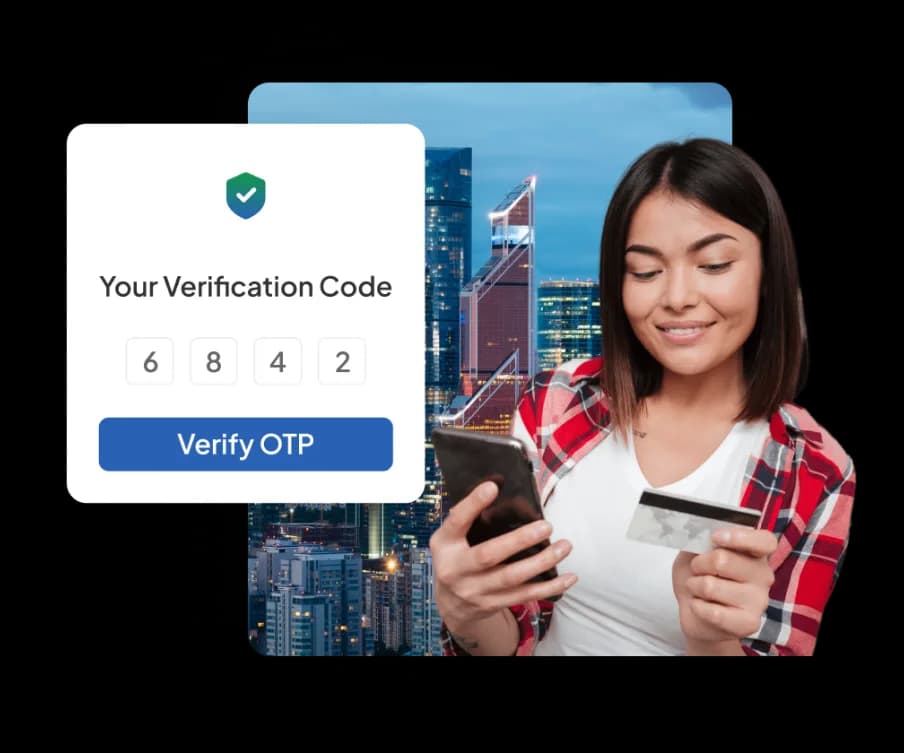
Trusted by 10,000+ businesses across India




















SMS OTP, in One Paragraph
SMS OTP is a one-time password delivered as a text message through a DLT-registered gateway, over the standard cellular signalling network. It works on any mobile phone- feature phone or smartphone, any OS- with no app or internet connection required. It typically arrives within a few seconds on a registered transactional route.
RCS OTP, in One Paragraph
RCS OTP is a one-time password delivered through RCS Business Messaging. It arrives inside the default Google Messages app on RCS-capable Android devices, under the business's Google-verified sender profile, complete with a visible name and logo badge. It delivers over data or wifi rather than the cellular signalling channel. It requires no separate app install beyond Google Messages itself being set as default.
RCS's Main Security Edge, Explained Honestly
RCS's verified badge is a stronger anti-phishing visual signal than a plain SMS sender ID, even a DLT-registered one. That's because the recipient sees the actual business name and logo in the thread, not just text.
| Aspect | SMS OTP | RCS OTP |
|---|---|---|
| Sender identity shown | A short alphanumeric sender header. It's text only, with no logo or badge, though DLT registration ties it to a verified, registered business. | A Google-verified sender badge with the business name and logo displayed directly inside the Google Messages thread. |
| Visual anti-phishing signal | Relies on the recipient recognising a registered sender ID. There's no visual verification mark in the thread itself. | The verified badge is a stronger visual cue than plain text, making it harder for a look-alike message to convincingly impersonate the business. |
| Underlying registration | TRAI DLT registration requires a verified, registered sender header before a business can send. | Google verifies the business identity as part of RCS Business Messaging onboarding before the verified badge is issued. |
| What it doesn't prevent | DLT registration reduces but doesn't fully eliminate look-alike sender ID risk on the broader messaging ecosystem. | The verified badge raises the bar for impersonation, but it doesn't make phishing attempts impossible. Device-level and account-level compromise remain separate risks. |
Where SMS Still Wins Outright
RCS delivers over data or wifi through Google Messages. SMS delivers over the standard cellular signalling channel and works even with zero data connectivity. That's the one area SMS still wins outright.
| Aspect | SMS OTP | RCS OTP |
|---|---|---|
| Device requirement | Works on every phone- feature phone or smartphone, any OS, any manufacturer. | Requires an RCS-capable Android device with Google Messages set as the default messaging app. |
| iOS support | Fully supported- SMS is a universal protocol across iOS and Android. | Still maturing on iOS- coverage and default-app behaviour are not yet as consistent as on Android. |
| Connectivity requirement | Delivered over the standard cellular signalling channel- works even with zero data connectivity. | Delivered over data or wifi through Google Messages- needs an active internet connection to arrive. |
| Practical India reach | Reaches virtually every mobile number in the country, regardless of handset or connectivity. | Reaches the growing but still partial share of Android users on RCS-capable devices with an active data or wifi connection. |
What Each Channel Is Actually Built For
RCS OTP for verified-sender trust
Where the recipient's device supports it, RCS's Google-verified badge and business logo in the thread are a stronger anti-phishing signal than a plain SMS sender ID.
SMS OTP for zero-connectivity delivery
SMS delivers over the standard cellular signalling channel and works even with no data connection. That's the one area SMS still wins outright over RCS.
RCS OTP's device dependency
RCS requires an RCS-capable Android device running Google Messages as the default app. It isn't yet a universal channel the way SMS is.
Hybrid delivery for full coverage
RCS OTP as the upgrade where the device supports it, with automatic SMS fallback, covers both the verified-sender advantage and universal reach.
Which Is Better, SMS OTP or RCS OTP? Honest Trade-offs
SMS OTP
Works on every phone- feature phone or smartphone, any OS
Delivers over the standard cellular signalling channel with zero data connectivity required
DLT registration in India requires registered, verified sender headers
The one channel that reaches literally every mobile number in the country
No dependency on a specific app being set as default
Sender ID is text only- no visual verified badge in the message thread
Comparatively easier for a look-alike sender ID to appear plausible than a badge-verified RCS sender
RCS OTP
Google-verified sender badge with business name and logo visible in the thread
A stronger visual anti-phishing signal than a plain text sender ID
Delivers through the default Google Messages app on supported Android devices- no separate install
Rich, branded message presentation that plain SMS can't match
Requires an RCS-capable Android device with Google Messages as the default app
iOS support is still maturing- coverage isn't yet universal
Needs an active data or wifi connection- doesn't work with zero connectivity
Not yet a fully universal channel the way SMS is
The Honest Recommendation: RCS Where Supported, SMS as Fallback
Lean on SMS OTP if you want...
- Guaranteed reach to every phone, including feature phones and iOS
- Delivery that works with zero data connectivity
- A DND-exempt transactional route already registered on TRAI DLT
- The universal fallback layer for every other OTP channel
Lean on RCS OTP if you want...
- A Google-verified sender badge visible in the message thread
- Stronger visual phishing resistance for supported Android users
- Rich, branded message presentation SMS can't match
- To upgrade the experience for your RCS-capable Android audience
RCS OTP is a strong upgrade where the recipient's device supports it, but it needs automatic SMS fallback for universal coverage. Not every device is RCS-capable, and RCS requires connectivity that SMS doesn't. See our RCS OTP page for setup details, and our OTP SMS vs WhatsApp OTP comparison for how that channel stacks up too.
RCS OTP and SMS Fallback, Configured as One Integration
As a Google RCS partner and DLT-registered bulk SMS operator, we run both channels for 10,000+ Indian businesses.
RCS-first, SMS-fallback flow
RCS OTP attempts delivery first on supported devices, with automatic SMS OTP fallback if delivery can't be confirmed. No manual intervention is required.
DLT-registered SMS routes
Transactional SMS templates registered on TRAI DLT with verified sender headers for the fallback layer.
Unified delivery reporting
One verification endpoint validates the OTP regardless of which channel delivered it, with delivery status visible in one dashboard.
One API, both channels
Integrate once and let the system route between RCS OTP and SMS OTP automatically.
Not sure whether to run SMS OTP, RCS OTP, or both?
Talk to our experts about setting up RCS-first, SMS-fallback OTP delivery for your login, payment, or verification flows.

One message could
change your business.
Big or small, we power communication for all- talk to us today.
OTP SMS vs RCS OTP FAQs
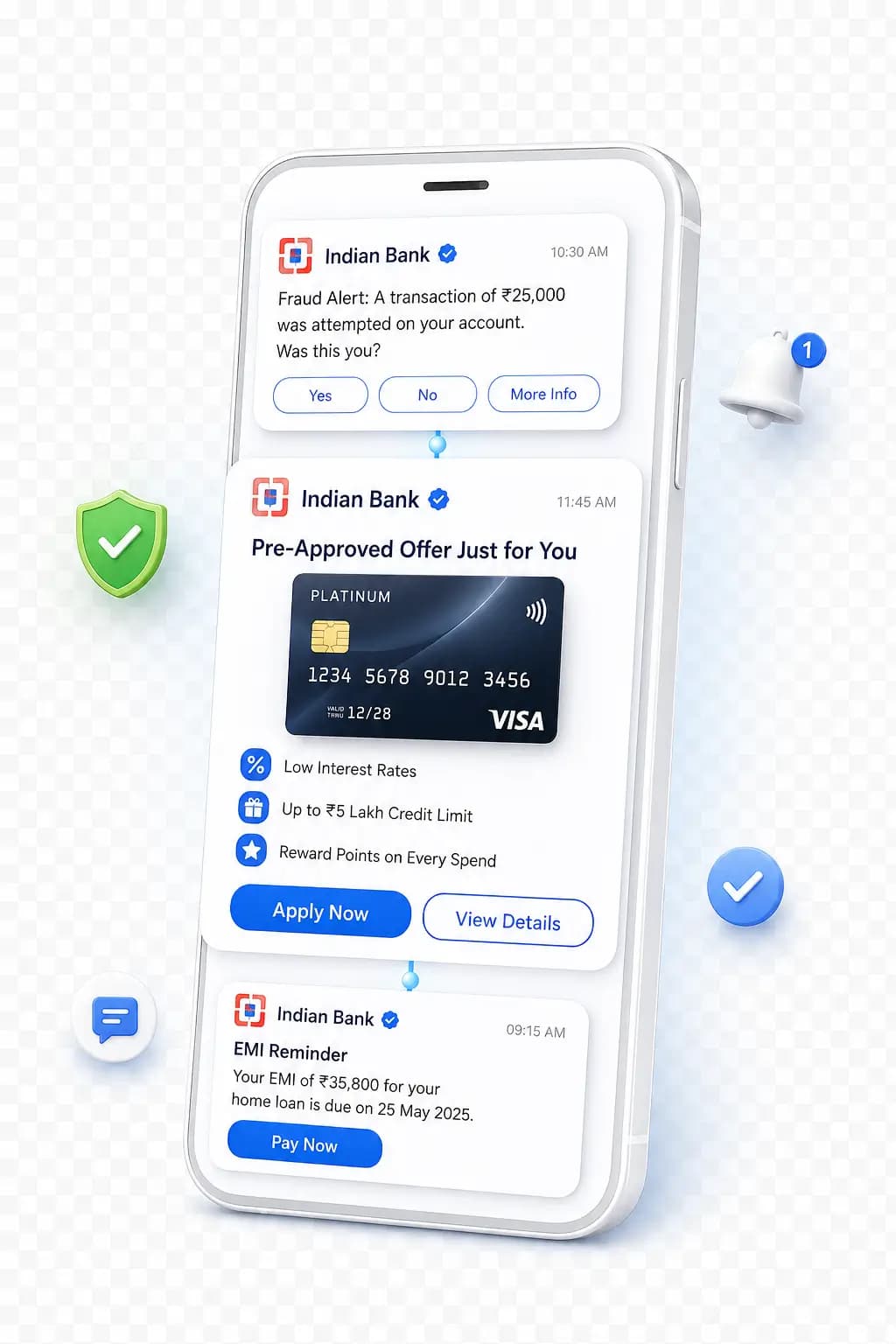
RCS OTP has a meaningful security edge in one specific dimension. It carries a Google-verified sender badge with the business's name and logo, visible directly in the Google Messages thread. This is a stronger visual anti-phishing signal than a plain SMS sender ID, even a DLT-registered one. SMS OTP's advantage is universal reach. It works on every phone, including devices and connectivity conditions where RCS simply isn't available. Neither is more secure across every dimension. RCS wins on verified-sender trust, and SMS wins on reach and connectivity independence.
RCS Business Messaging displays a Google-verified sender badge- the business's verified name and logo- directly inside the message thread. This is a stronger anti-phishing visual signal than a plain SMS sender ID. A phishing message impersonating a business over SMS is just text, while impersonating a verified RCS badge is considerably harder to fake convincingly.
The verified badge raises the bar for impersonation meaningfully, but it doesn't make phishing attempts impossible. It makes it harder for a fraudulent message to convincingly present itself as a legitimate business, since recipients can visually check for the verified name and logo. But device-level and account-level compromise remain separate risks that verified branding alone doesn't address.
No. RCS OTP is delivered over data or wifi through Google Messages, so it needs an active internet connection to arrive. This is the one area where SMS OTP still wins outright. SMS delivers over the standard cellular signalling channel and works even with zero data connectivity, which RCS cannot do.
iOS support for RCS is still maturing, and coverage and default-app behaviour aren't yet as consistent as on Android. SMS OTP, by contrast, works identically across iOS and Android, since it's a universal protocol rather than an app-dependent one. This makes SMS the more reliable fallback whenever the recipient's device or OS can't be confirmed to support RCS.
RCS OTP requires an RCS-capable Android device with Google Messages set as the default messaging app. SMS OTP has no such requirement. It works on literally every phone, feature phone or smartphone, running any operating system. That remains SMS's clearest structural advantage over RCS.
Delivery speed for both channels is generally fast on a good connection, but they take different paths. RCS delivers over data or wifi through Google Messages, while SMS delivers over the standard cellular signalling channel. SMS remains reliable even with zero data connectivity, where RCS delivery isn't possible at all. So on a pure connectivity-independence basis, SMS has the edge.
The honest recommendation is RCS OTP as a strong upgrade where the recipient's device supports it, paired with automatic SMS OTP fallback for universal coverage. RCS's verified-sender badge improves phishing resistance for supported Android devices with connectivity. SMS ensures the OTP still reaches users on unsupported devices, iOS, or areas with no data connection.
RCS Business Messaging is available through Google-verified partners, and Get Click Media, as a Google RCS partner, supports RCS OTP delivery for Indian businesses. Availability to a given recipient still depends on their device being RCS-capable and on Google Messages being their default app. Coverage is growing but not yet universal, which is why an SMS fallback remains part of a reliable OTP setup.
We configure RCS OTP as the primary channel for recipients on RCS-capable Android devices with an active connection. Automatic SMS OTP fallback runs on our DLT-registered routes when RCS delivery can't be confirmed, covering devices without RCS support, iOS users, and low-connectivity conditions. See our dedicated RCS OTP page for the full setup, linked below.
Related Bulk SMS resources
Still deciding between SMS OTP and RCS OTP?
Get Click Media configures RCS-first, SMS-fallback OTP delivery for 10,000+ Indian businesses- request a demo and we'll map out the right setup for yours.