

Bulk SMS for Retail & Multi-Store Chains In-Store, Loyalty & Store-wise Campaigns India
Automate in-store billing receipts, loyalty points alerts, store-wise festive sale announcements, stock-arrival alerts, and birthday offers on DLT-registered SMS routes built for physical and omnichannel retail. Get Click Media powers store-wise customer SMS for multi-outlet retail chains across India- lifting footfall response and loyalty program engagement. Selling online too? See our bulk SMS for ecommerce page for pure-online order and delivery use cases.
TRAI DLT registered · Store-wise customer segmentation · POS & loyalty integration · Pan-India delivery
21%
Store footfall response to sale SMS
52%
Loyalty program repeat-visit rate
19%
Birthday offer redemption rate
₹0.09
Starting price per SMS
Trusted by 10,000+ businesses across India



















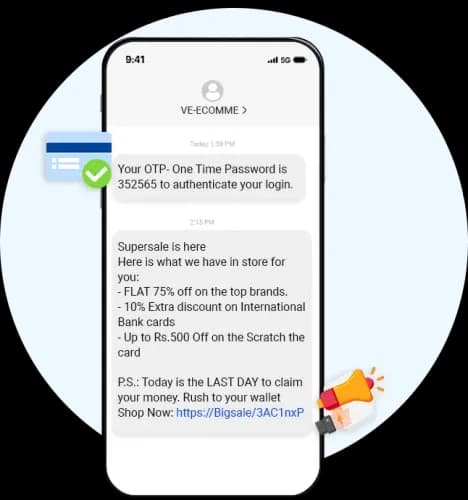
Bulk SMS for Retail
An effective SMS workflow begins with the customer moment: what triggered the message, who should receive it, what action they need to take, and how the business will handle delivery failures, customer replies, or requests that need human follow-up.
Why Retail Chains and Multi-Store Brands in India Need Bulk SMS
The strongest implementations avoid treating every customer the same way. Segmenting messages by lifecycle stage, location, service status, account state, order status, appointment timing, or other relevant industry context can help make communication more useful and reduce unnecessary outreach.
One dashboard for receipts, loyalty and store campaigns
Manage every in-store touchpoint- billing receipt SMS, loyalty points alerts, store-wise sale announcements, and stock-arrival notices- from a single dashboard connected to your POS and loyalty platform.
- POS and loyalty platform integration
- Store-wise customer list segmentation
- Loyalty balance and redemption alerts
- Separate transactional and promotional templates
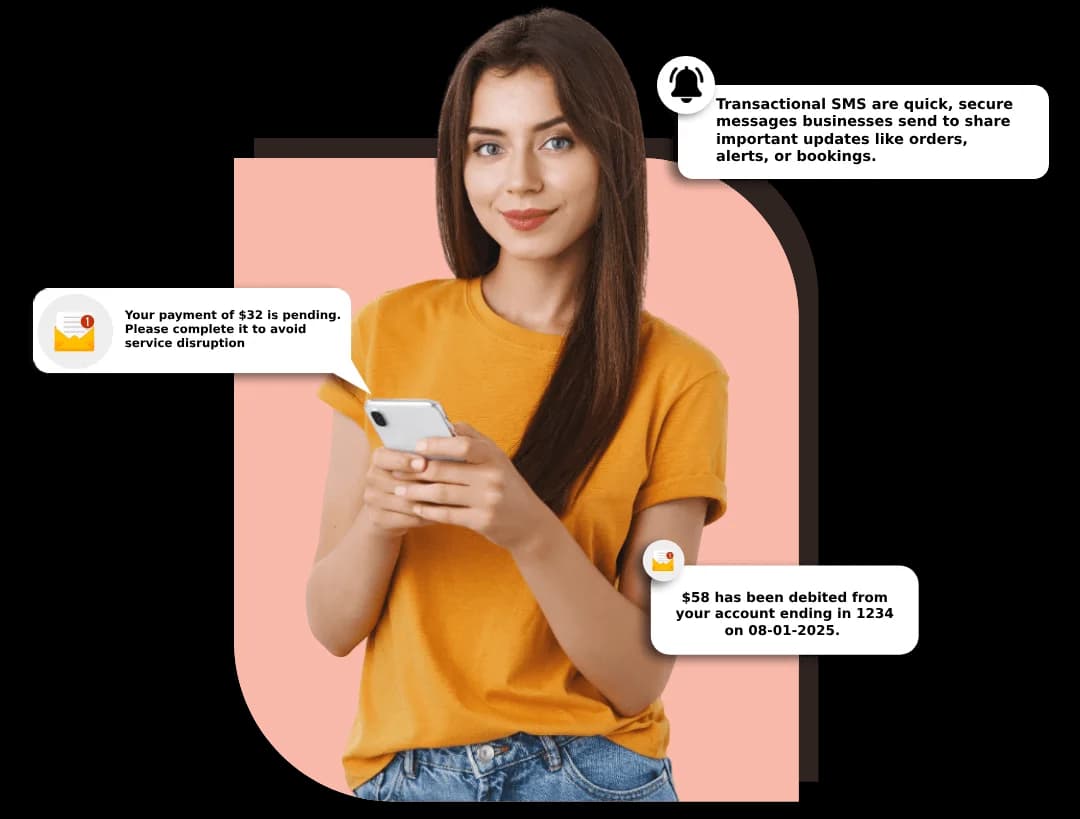
Sale announcements mapped to the right store
Launch a festive sale, new-collection alert, or store event and reach only the customer list mapped to that specific outlet- so every message is relevant to a store the recipient can actually visit.
- Festive and seasonal sale announcements
- New-collection and stock-arrival alerts
- Birthday and anniversary offer automation
- Store-specific event invitations
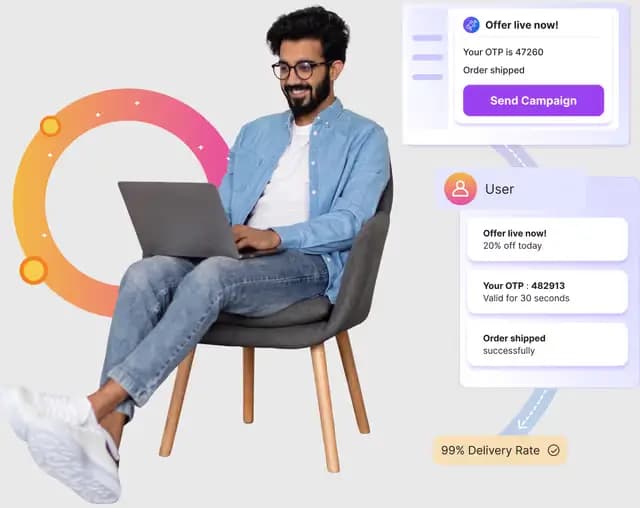
Bulk SMS Use Cases for Retail and Multi-Store Chains- 6 Automations
These examples show common message triggers, message purposes, and operational goals for retail organizations. Each workflow should be adjusted to the organization's customer lifecycle, consent position, service process, and compliance requirements.
In-Store Billing / Receipt SMS
Trigger: Purchase billed at the store POS terminal. Message: Digital receipt SMS with bill amount, items count, and loyalty points earned on the purchase. Intended outcome: Paperless receipt option and a built-in loyalty point touchpoint at checkout.
Loyalty Points Balance & Redemption Alert
Trigger: Points earned, balance updated, or a redemption threshold reached. Message: Current points balance and nearest redemption milestone sent after each qualifying purchase. Intended outcome: Higher repeat visit rate as customers track progress toward a redeemable reward.
Festive / Seasonal Sale Announcement (Store-wise)
Trigger: Festive or seasonal sale launched at a specific store or store cluster. Message: Sale dates and top offers sent only to the customer list mapped to that store. Intended outcome: Higher footfall response versus one blanket message to the entire chain database.
Stock-Arrival / New-Collection Alert (Store-specific)
Trigger: New collection or restocked item arrives at a particular outlet. Message: New-arrival notice naming the store location, sent to customers who shop that outlet. Intended outcome: Faster sell-through on new stock at the specific store it arrived in.
Birthday / Anniversary Offer SMS
Trigger: Customer's birthday or purchase-anniversary date from CRM data. Message: Personalised offer valid for a limited window, redeemable in-store. Intended outcome: Higher redemption rate than a generic, non-personalised discount campaign.
Store-Specific Event Invitation
Trigger: In-store event, launch, or exclusive preview scheduled at an outlet. Message: Event invitation with date, time, and store address sent to the local customer list. Intended outcome: Better-attended store events driven by geographically relevant targeting.
Automated communication is most effective when it is connected to a real business event, such as an application update, missed appointment, payment status, delivery milestone, support request, or service renewal. This helps keep each message timely and relevant rather than generic.
Bulk SMS measurement examples for Retail
The table below should be read as campaign, operational, or source-specific data—not a guaranteed outcome for every business. Actual performance depends on audience quality, message relevance, sender and template setup, timing, delivery conditions, downstream experience, and the methodology used to measure results.
| Metric | Baseline or previous process | Measured after implementation | Source or measurement context |
|---|---|---|---|
| Store footfall response to sale announcement | 9% | 21% (store-wise SMS targeting) | GCM retail chain client data |
| Loyalty program repeat-visit rate | 34% | 52% (with balance/redemption SMS) | GCM retail loyalty program data |
| Birthday offer redemption rate | 6% | 19% (personalised SMS offer) | GCM multi-store client data |
| New-collection sell-through (first 7 days) | 100% baseline | 27% faster | GCM store-arrival alert data |
| In-store event attendance | 100% baseline | 33% higher (store-wise invite) | GCM retail events client data |
Store footfall response to sale announcement
- Baseline or previous process
- 9%
- Measured after implementation
- 21% (store-wise SMS targeting)
- Source or measurement context
- GCM retail chain client data
Loyalty program repeat-visit rate
- Baseline or previous process
- 34%
- Measured after implementation
- 52% (with balance/redemption SMS)
- Source or measurement context
- GCM retail loyalty program data
Birthday offer redemption rate
- Baseline or previous process
- 6%
- Measured after implementation
- 19% (personalised SMS offer)
- Source or measurement context
- GCM multi-store client data
New-collection sell-through (first 7 days)
- Baseline or previous process
- 100% baseline
- Measured after implementation
- 27% faster
- Source or measurement context
- GCM store-arrival alert data
In-store event attendance
- Baseline or previous process
- 100% baseline
- Measured after implementation
- 33% higher (store-wise invite)
- Source or measurement context
- GCM retail events client data
Review source notes carefully. If a number is not supported by a named study, client-approved report, internal measurement period, or documented methodology, present it as an operational target or example rather than a verified benchmark.
Build a more reliable SMS workflow for Retail
A bulk SMS program is more than a sender ID and a message template. It should connect a clearly defined business event to a relevant audience, a compliant communication path, and a measurable operational outcome.
Define the business trigger
Identify the event that sends the message, the source system, the intended recipient, and the next action required.
Write for clarity and action
Keep the message recognizable, concise, and specific about what happened, what the recipient should do, and where they can get help.
Prepare compliance and support
Confirm DLT setup, approved headers and templates, consent handling where needed, reporting, and escalation paths for exceptions.
Get Click Media's Bulk SMS Capabilities for Retail and Multi-Store Chains
These capabilities support the practical work behind SMS communication: managing sender setup, organizing message flows, tracking delivery, connecting data sources, and helping teams review and improve their communication over time.
POS & loyalty platform integration
API integration with POS billing and loyalty management systems for real-time receipt and points triggers
Store-wise customer segmentation
Segment and target customer lists by individual store or outlet for geographically relevant campaigns
DLT-registered, dual-route templates
Separate DLT-registered templates for transactional billing/loyalty messages and promotional sale offers
Pan-India multi-store delivery
Reliable SMS delivery across every store location in a multi-outlet retail chain, metro to Tier 2/3
Scheduled and event-triggered campaigns
Festive sale blasts, birthday offers, and stock-arrival alerts scheduled or triggered from CRM/POS data
Sender ID approval support
GCM manages your retail brand's approved sender ID so store communication is instantly recognisable
The exact capabilities required depend on your message volume, channel strategy, team workflow, existing systems, DLT setup, and the level of automation needed for your customer communication.

One message could
change your business.
Big or small, we power communication for all- talk to us today.
Bulk SMS for Retail
These answers address common questions about planning, setting up, and using bulk SMS. Requirements may vary according to your industry, message type, DLT status, consent process, sender configuration, and technical workflow.
Retail chains and multi-store brands use bulk SMS for physical and omnichannel store communication- in-store billing receipt confirmations, loyalty points balance and redemption alerts, store-wise festive sale announcements, new-collection or stock-arrival alerts for a specific store, and birthday or anniversary offer SMS. It differs from ecommerce SMS in that messages are typically triggered by an in-store POS transaction and segmented by which physical store the customer shops at.
Bulk SMS for retail is built around physical store transactions- POS billing receipts, store-wise loyalty and sale alerts, and stock-arrival notices tied to a specific outlet- while bulk SMS for ecommerce covers purely online order flows such as cart abandonment, order confirmation, and courier tracking. Multi-store chains selling both in-store and online typically use both: see the dedicated bulk SMS for ecommerce page for online-only order and delivery use cases.
Yes- retail chains commonly segment their customer database by the store or outlet where each customer originally transacted, then send festive or seasonal sale announcements only to that store's list so the offer is relevant to a location the customer actually visits. This store-wise segmentation is a standard bulk SMS practice for multi-outlet retail brands and improves footfall response compared to a single blanket announcement to the entire chain's database.
A loyalty points balance or redemption confirmation tied to an existing customer's account activity is typically treated as a transactional service message and can go on the DND-exempt transactional route, while a separate sale or discount offer SMS is promotional and requires the recipient to not be on the DND registry. Get Click Media configures loyalty and offer templates on the correct respective routes so both message types stay DLT compliant.
Every sender ID and message template a retail chain uses must be registered on the TRAI DLT platform, with transactional billing and loyalty messages kept on a separate registered route from promotional sale and offer announcements. Get Click Media manages sender ID and per-template DLT registration so store-wise retail SMS campaigns stay compliant as the store network grows.
Related Bulk SMS Resources
Explore supporting product pages, implementation guides, pricing information, industry resources, and compliance material to make a more informed decision about your SMS communication strategy.
Ready to drive store footfall with store-wise bulk SMS?
Get Click Media provides DLT-registered bulk SMS for retail chains and multi-store brands with POS integration and store-wise customer segmentation.