
Does RCS Work on iPhone? Here's What Actually Changed
Apple has been adding RCS support to the iOS Messages app, starting with iOS 18, for texting Android contacts. Here's what that means for iPhone users and for businesses running an RCS messaging program.
Reaches Android directly today, and a growing share of iPhone users as Apple's rollout matures
Trusted by 10,000+ businesses across India



















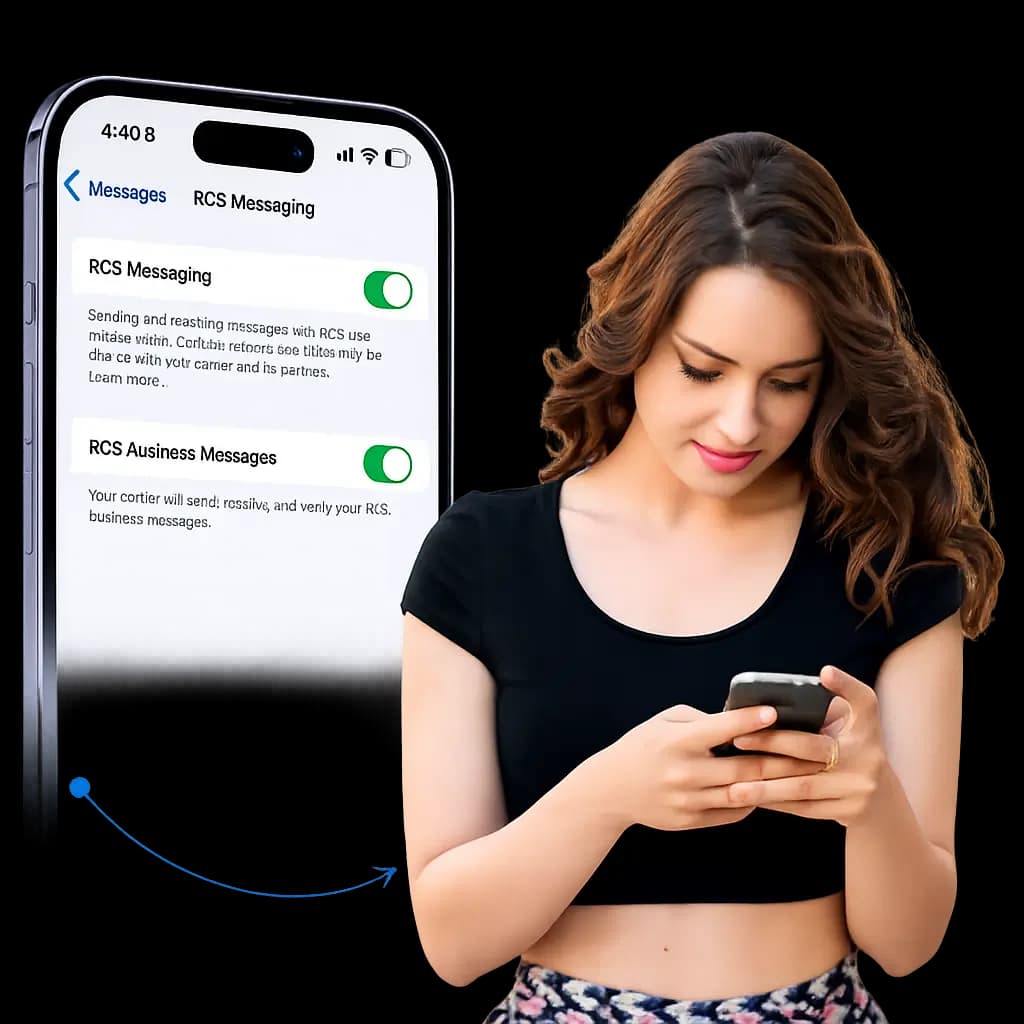
RCS on iPhone means Apple has added RCS support to the iOS Messages app, starting with iOS 18, specifically for texting Android contacts. It sits alongside iMessage and SMS rather than replacing either- iMessage-to-iMessage still works only between Apple devices. On a compatible iPhone, RCS typically needs to be turned on under Settings > Apps > Messages, and it also depends on carrier support, so it isn't switched on for every user automatically. If either device or carrier doesn't support RCS, the conversation falls back to plain SMS, the same way it always has.
For a business running an RCS messaging program, iOS support doesn't change the starting point- Android remains India's dominant smartphone platform, and RCS through Google Messages already reaches that audience directly today. What Apple's rollout adds is a growing second channel: as more carriers and devices support it, more iPhone-to-Android conversations get RCS's richer experience instead of falling back to SMS. Get Click Media builds RCS Android-first, with automatic SMS fallback, so a business's reach never depends on a single platform's rollout maturing on schedule.
How RCS Ended Up on an iPhone at All
RCS is a GSMA-standardised messaging protocol, long supported on Android through Google Messages- for years, the obvious gap was Apple. iPhone had no RCS support at all, so every iPhone-to-Android text dropped straight to plain SMS, with none of the read receipts, typing indicators, or rich media that Android-to-Android conversations already had.
That changed with Apple's announcement that it would add RCS support to iOS, arriving with iOS 18. It's worth being precise about what this is and isn't: Apple didn't fold RCS into iMessage, and iMessage-to-iMessage still works exactly as it always has, exclusively between Apple devices. What changed is the fallback path- when an iPhone texts a non-iMessage contact, that conversation can now use RCS instead of plain SMS, still shown as a non-iMessage (green bubble) thread. See our RCS vs iMessage page for the fuller breakdown of how the two sit next to each other on a modern iPhone.
RCS on an iPhone, in Practice
On a compatible iPhone, RCS is used specifically for texting contacts who aren't on iMessage- in practice, almost always Android users. A few practical details define what that looks like day to day.
- Only for non-iMessage contacts- iPhone-to-iPhone conversations continue to use iMessage exactly as before; RCS only comes into play on the non-iMessage side of Messages.
- Enabled per device and carrier- RCS on iPhone depends on both being turned on in Settings and the carrier supporting it, not every carrier or plan has rolled it out yet.
- Requires the same on both ends- if the recipient's device or carrier doesn't support RCS either, the conversation falls back to plain SMS automatically, the same way it always did.
- Still a non-iMessage thread- an RCS conversation on iPhone doesn't turn blue; it stays a distinct, non-iMessage thread, just with richer capabilities than SMS offered before.
iOS RCS vs Android RCS: What's Still Catching Up
Android RCS through Google Messages has years of maturity behind it. Apple's iOS RCS support is real, but newer- treat every iOS row below as a rollout still in progress, not a settled feature set.
| Feature | Android RCS | iPhone (iOS) RCS |
|---|---|---|
| Read receipts | Supported in Google Messages | Rolling out- support is still maturing and depends on carrier |
| Typing indicators | Supported | Rolling out- not yet consistent across every carrier |
| Rich cards & carousels from a business sender | Supported via the RCS Business Messaging API | Still maturing- business-facing rich media on iPhone depends on Apple's ongoing rollout |
| Encryption for person-to-person chat | End-to-end encrypted through Google Messages | Still maturing as Apple's implementation rolls out further |
| Business API access | Direct, documented RCS Business Messaging API | Reach is growing as Apple's rollout matures across carriers, without a separate Apple-only program required |
What iOS RCS Support Means for a Business Messaging Program
For a business running an RCS Business Messaging program, like the ones Get Click Media builds for Indian brands, this doesn't change the starting point- Android remains India's dominant smartphone platform, and RCS through Google Messages already reaches that audience directly today. What Apple's iOS RCS rollout adds is a growing second channel: as more carriers and devices support it, a share of iPhone-to-Android conversations that used to fall back to plain SMS increasingly get RCS's richer experience instead, without needing a second, separate Apple-only program.
For the deeper comparison between RCS and Apple's own business channel, Apple Messages for Business (Business Chat), see our RCS vs iMessage page- we won't repeat that breakdown here.
What iPhone Users and Businesses Should Know
Enabling RCS in iOS Settings
RCS on a compatible iPhone typically needs to be turned on under Settings > Apps > Messages- it isn't automatically active for every user the moment iOS updates.
Carrier support still varies
Whether RCS actually works on a given iPhone depends on the carrier as much as the iOS version- rollout is still maturing, and not every plan or network supports it yet.
Why some messages still show as SMS
If either the iPhone or the recipient's device or carrier doesn't support RCS, the conversation falls back to plain SMS automatically- the same fallback behaviour RCS has always had.
Why SMS fallback still matters
Because iOS RCS support is still rolling out unevenly across carriers, Get Click Media's automatic SMS fallback keeps a business's messages reaching every iPhone user, not just the ones already on a supported carrier.


Largest CPaaS partner across Android and growing iOS reach
Get Click Media builds RCS-first messaging programs that reach Android directly and iPhone users through automatic SMS fallback.

One message could
change your business.
Big or small, we power communication for all- talk to us today.
RCS on iPhone FAQs

Yes. Apple has been adding RCS support to the iOS Messages app, starting with iOS 18, specifically for texting Android users. It sits alongside iMessage and SMS rather than replacing either- iMessage-to-iMessage still only works between Apple devices.
On a compatible iPhone and carrier, RCS typically needs to be enabled under Settings > Apps > Messages, alongside carrier support. It isn't necessarily switched on by default the moment a device updates to a supported iOS version.
A green, non-iMessage thread can mean either plain SMS or RCS underneath- the colour itself doesn't distinguish them. If RCS isn't available on both your device and the recipient's, because of carrier support, settings, or device compatibility, the conversation falls back to plain SMS automatically.
Both use end-to-end encryption for native person-to-person chat within their own ecosystems- iMessage between Apple devices, RCS through the Universal Profile carriers like Jio and Airtel support. Apple's RCS implementation is still maturing, so exact parity depends on Apple's ongoing rollout and carrier support.
No. iMessage-to-iMessage stays exclusive to Apple devices and works exactly as it always has. RCS is used specifically for iPhone conversations with non-iMessage contacts- in practice, mostly Android users- as a richer alternative to plain SMS.
Not fully yet. Rich cards, carousels, and similar business-facing RCS features are well established on Android through the RCS Business Messaging API, while the equivalent experience on iPhone is still maturing as Apple's iOS RCS support rolls out further.
Apple's RCS support arrived starting with iOS 18, for texting Android contacts specifically. Exact device and iOS version requirements depend on Apple's ongoing rollout and carrier support, so it's worth checking current device settings and carrier details directly rather than assuming a fixed cutoff.
Yes. RCS support on iOS depends on both the device and the carrier, similar to how it works on Android- a carrier that hasn't rolled out RCS support yet means the conversation falls back to SMS regardless of iOS version.
The conversation falls back to plain SMS automatically, on iPhone just as it does on Android. RCS is designed to degrade gracefully- there's no broken or undelivered message, just a plainer version of the same conversation.
Yes- Get Click Media's RCS Business Messaging is built Android-first, since Android is India's dominant smartphone platform, but it reaches a growing share of iPhone users too as Apple's iOS RCS rollout matures across carriers, with automatic SMS fallback so reach never depends on a single channel.
Ready to reach Android and iPhone users with one RCS program?
Get Click Media builds RCS-first messaging with automatic SMS fallback, so your reach never depends on a single platform's rollout.