
RCS vs OTP SMS: Which Is More Secure for Authentication?
A one-time code is only as trustworthy as its sender. See how RCS's verified sender badge closes the phishing gap that plain OTP SMS has lived with for years- and where SMS still earns its place as the universal fallback.
Trusted by 10,000+ businesses across India
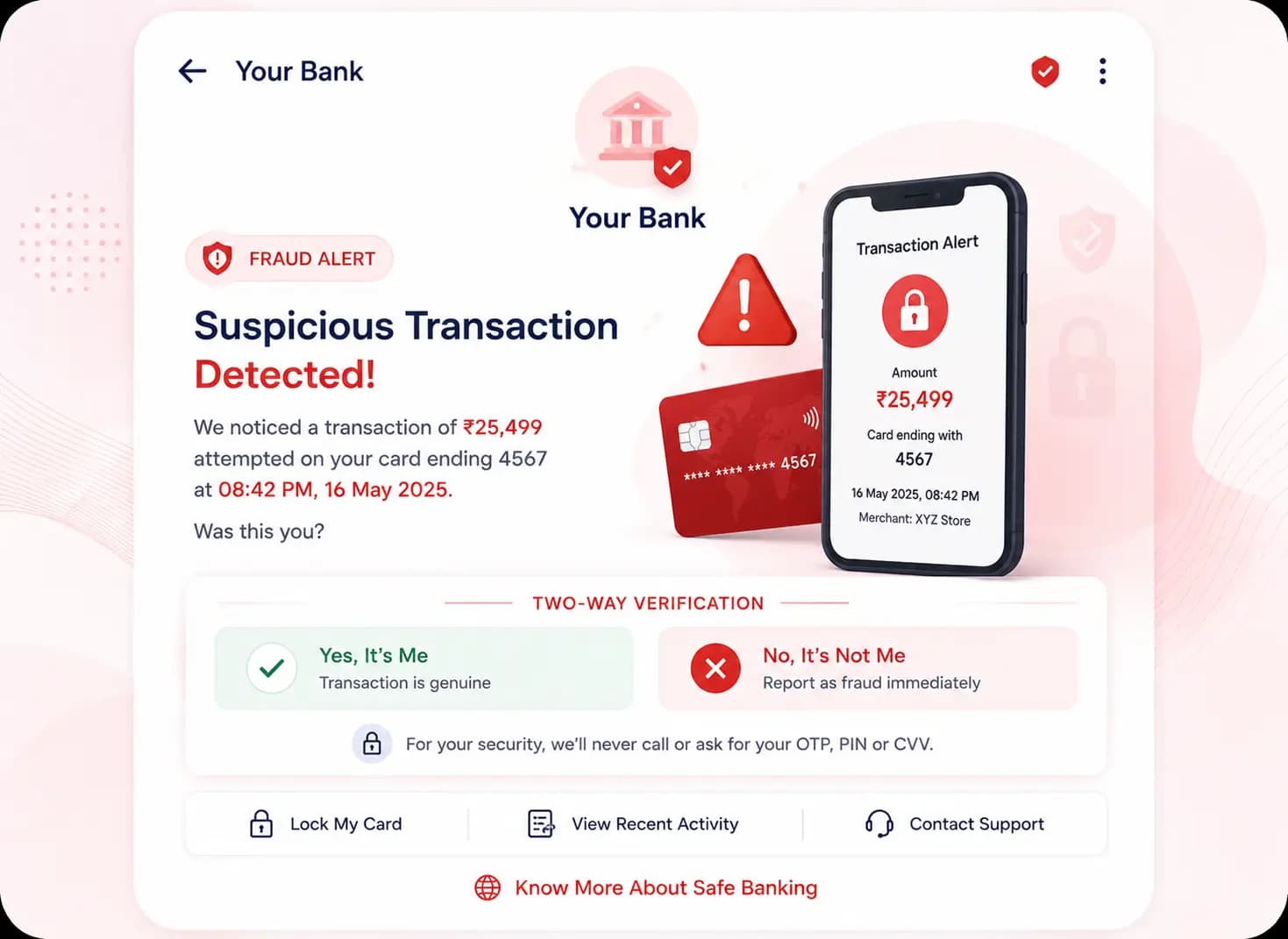
Trusted by 10,000+ businesses across India




















RCS vs OTP SMS: The Short Version
Both channels deliver a one-time code in seconds, so speed isn't the differentiator. The real difference is sender trust: OTP SMS sender IDs carry no verification step at all, which is exactly what smishing attacks exploit with lookalike bank OTP texts. RCS closes that gap with a Google-verified business name, logo, and checkmark badge appearing next to every code, plus read receipts that flag stuck login attempts- a materially harder bar for a fraudster to fake than registering a spoofed SMS sender ID.
Choose RCS OTP when sender trust and phishing resistance matter, particularly for banking, fintech, and other authentication moments customers need to trust at a glance- though it's a trust enhancement, not a formal regulatory certification. Keep OTP SMS as the fallback layer, since it reaches every handset with zero setup. Get Click Media runs RCS OTP first with automatic SMS fallback, so delivery is never blocked by device or carrier support.
RCS as a Delivery Channel for a Verified Code
In an authentication context, RCS (Rich Communication Services) is the channel that carries your one-time code alongside a Google-verified business name, logo, and checkmark badge- built into Google Messages on Android, with no separate app or opt-in step for the customer. The rich-media features that make RCS attractive for marketing (carousels, product images) matter far less here; what matters is that the code arrives visibly tied to a verified sender. See our RCS OTP page for a full breakdown of how that verification is set up and delivered.
Plain SMS, Purpose-Built for One-Time Codes
OTP SMS is plain-text SMS used specifically to deliver a one-time password for login, two-factor authentication, or transaction verification- a short numeric code sent from a sender ID with no built-in identity check. It's the incumbent channel for authentication precisely because it reaches every handset instantly, and Get Click Media's OTP SMS service remains the fallback layer under every RCS OTP send for exactly that reason.
RCS vs OTP SMS, Feature by Feature
| Feature | RCS | OTP SMS |
|---|---|---|
| Rich Images | ✅ (logo/badge) | ❌ |
| Carousels | ✅ | ❌ |
| CTA Buttons | Depends (rarely needed for OTP) | ❌ |
| Verified Brand | ✅ | ❌ (easily spoofed sender ID) |
| Read Receipts | ✅ | ❌ |
| Analytics | ✅ | Delivery status only |
| API Integration | ✅ | ✅ |
| Customer Experience | High (visible trust signal) | Medium (functional but unverified) |
| Phishing resistance | High | Low |
| Universal device reach | High (with automatic SMS fallback) | Highest (works on every phone) |
What RCS OTP Costs vs OTP SMS
Unlike the bigger cost gaps you'll see on some of our other comparison pages, RCS and OTP SMS are both priced per message, in a broadly similar range for transactional sends. This isn't a page where cost should drive your decision- security and trust are. See our OTP SMS Pricing page and RCS Pricing India page for current rates before comparing.
A Code Is a Code- Except for One Thing
Rich media matters far less for OTP than it does for marketing- nobody needs a carousel to read a six-digit code. The one rich element that genuinely matters here is the verified sender badge and logo appearing alongside the code, which is why this section looks different from our other RCS comparison pages.
Verified sender badge next to the code
The one "rich" element that actually matters for OTP- your logo, business name, and checkmark appear alongside the code, not a carousel or product image.
No carousels or CTA buttons needed
Marketing-style rich media (carousels, swipeable cards) adds little value here- a code is a code, and the trust signal is what earns its place.
Read receipts as an operational signal
Knowing an OTP was actually opened, not just delivered, helps flag stuck authentication attempts before a customer gives up and calls support.
Delivery Speed for Time-Sensitive OTPs
A slow OTP is functionally as bad as no OTP at all- both channels are engineered for near-instant delivery, so speed itself isn't really what separates RCS from SMS OTP. Trust and verification are the actual differentiators, covered in depth in the next section.
| Aspect | OTP SMS | RCS |
|---|---|---|
| Typical delivery time | Seconds, via standard SMSC routing- the benchmark every OTP flow is built around. | Seconds, via RCS carrier and Google Messages infrastructure- comparable to SMS in practice. |
| What actually varies | Carrier congestion and DLT scrubbing on the SMS route, not the channel itself. | Device RCS capability check adds a negligible handshake step before the message renders. |
| Failure behaviour | If the SMS route is slow or blocked, the code simply doesn't arrive in time. | If RCS is unavailable, Get Click Media falls back to SMS automatically rather than waiting or failing. |
Both channels are built for speed
SMS and RCS OTP delivery both land in seconds under normal conditions- neither channel is meaningfully "faster" for this use case.
Trust, not speed, is the differentiator
A fast OTP that a customer hesitates to act on because it looks unverified is functionally as bad as a slow one- verification is what actually improves completion rates.
Fewer abandoned logins
A clearly branded RCS OTP reduces the pause-and-doubt moment that causes some customers to ignore or delete unmarked SMS codes.
Phishing & Spoofing Resistance: The Real Difference
This is the single most important comparison on this page. SMS sender IDs- whether a numeric shortcode or an alphanumeric name- carry no verification step whatsoever. Anyone can register a sender ID that closely resembles a bank's or a well-known brand's, and carriers have no mechanism to confirm the sender is who it claims to be before delivering the message. This gap is exactly what smishing attacks exploit: fake "your bank OTP" texts, fraudulent delivery-alert codes, and lookalike account-verification messages that read as genuine because SMS gives the recipient no way to check.
RCS closes that specific gap. Before a business can send a single RCS message under its name, Google's brand verification process confirms the business's identity- the checkmark badge, logo, and business name that then appear next to every OTP are a direct result of that review, not something a sender can simply add to their messages unverified. A fraudster attempting to impersonate a verified RCS sender would need to pass that same Google review under the real business's identity, which is a materially harder bar than registering a lookalike SMS sender ID.
It's worth being precise about what this does and doesn't solve. Verification confirms who sent the message- it doesn't encrypt the code differently, and it doesn't stop a customer from being socially engineered into reading a genuine code aloud to a scammer over a phone call. What it removes is the specific, well-documented sender-impersonation vector that plain OTP SMS has lived with since the channel existed.
| Aspect | OTP SMS | RCS |
|---|---|---|
| Sender identity | A numeric or alphanumeric sender ID- either can be spoofed or closely imitated by fraudsters. | Verified business name, logo, and checkmark badge confirmed by Google before the message is sent. |
| Known attack pattern | Smishing- fake "bank" OTP or account-alert texts that mimic a real sender ID closely enough to fool recipients. | Verification closes this specific gap- a fraudster cannot obtain your verified badge without passing Google's brand review. |
| Customer-side signal | No visual cue distinguishing a genuine OTP from a lookalike- customers must judge the message content alone. | The badge, logo, and business name appear directly next to the code, giving a visual trust signal SMS cannot show. |
| What verification does not do | N/A | It does not encrypt the code itself or replace 2FA best practices- it verifies who sent the message, not what happens after delivery. |
Delivery Status vs Open Status
OTP SMS gateways typically report delivery status and nothing more- you know the code reached the handset, not whether the customer ever opened the message. RCS OTP sent through Get Click Media adds read receipts on top of delivery status, which is a genuinely useful operational signal for authentication: a code that was delivered but never opened points to a stuck login flow worth investigating, not just a support ticket waiting to happen.
Fallback Reliability: Never Blocked by Channel Availability
If your authentication service already calls an SMS gateway API, adding RCS OTP is a payload change, not a rebuild- Get Click Media's RCS API follows the same request/response pattern your OTP SMS integration already uses. Just as importantly, automatic SMS fallback is configured once at the account level: when a customer's device or carrier doesn't support RCS, the same one-time code delivers as standard SMS without any additional logic on your side. Authentication is never blocked waiting on RCS availability- you get the verified experience where it's supported, and the same reliable OTP SMS delivery everywhere else.
| Aspect | OTP SMS | RCS |
|---|---|---|
| Primary route | SMS is the channel itself- no fallback layer beneath it. | RCS is attempted first for the verified experience. |
| If the device/carrier lacks RCS support | N/A- SMS already reaches virtually every handset. | Get Click Media detects this automatically and re-routes the same OTP as standard SMS, no manual intervention needed. |
| Integration effort for fallback | N/A | Configured once at the account level- not something you build per API call. |
| Net delivery guarantee | Near-universal on its own. | Same near-universal reach as SMS, with the verified badge layered on top wherever RCS is supported. |
Banking & FinTech Compliance Considerations
Banks, NBFCs, and fintechs are increasingly attentive to sender-identity trust for authentication messages- fund transfer confirmations, card activation codes, and login OTPs are exactly the messages fraudsters most want to impersonate. RCS OTP's verified badge is a meaningful addition on top of whatever 2FA and fraud-prevention framework a financial business already runs- it visibly signals to the customer that the message genuinely came from the institution. It's important not to overstate what this is, though: a verified RCS sender badge is a trust and fraud-prevention enhancement, not a formal RBI or regulatory compliance certification. It doesn't replace existing 2FA obligations, KYC processes, or audit requirements- it sits alongside them as one additional layer of customer-facing assurance.
Beyond banking specifically, both RCS OTP and OTP SMS suit the same broad set of authentication moments- login verification, password resets, transaction approvals, and new-account confirmation- with RCS adding the verified layer wherever the recipient's device supports it, and OTP SMS carrying the same code everywhere else.
RCS OTP vs OTP SMS, Weighed Honestly
RCS OTP
Google-verified sender badge, logo, and business name on every code
Significantly harder for phishing texts to imitate
Read receipts show whether the code was actually opened
Automatic SMS fallback- delivery is never blocked
Delivery speed comparable to SMS for time-sensitive codes
Requires Google brand verification before launch
Verified badge only renders on RCS-capable devices
Rich formatting adds little beyond the trust badge- not a reason to switch on its own
OTP SMS
Works on every phone, including feature phones
Decades of carrier infrastructure- proven at scale
No verification or setup required to start sending
Simple, predictable per-message pricing
Sender ID has zero verification- a well-documented phishing vector
No visual trust signal distinguishing genuine from spoofed codes
No read receipts- delivery status only, not open status
Smishing attacks specifically target this lack of verification
A Simple Decision Matrix
Choose RCS OTP if you want...
- A verified sender badge visible next to every code
- Stronger resistance to phishing and sender spoofing
- Read receipts to spot stuck authentication attempts
- An added trust signal for banking/fintech authentication
- All this without giving up universal reach (fallback included)
Keep OTP SMS as your fallback if you want...
- Guaranteed delivery to every phone, RCS-capable or not
- A channel with zero setup or verification overhead
- Simple, predictable per-message pricing
- A safety net under every RCS OTP send, at no extra integration cost
Most Get Click Media clients don't pick one over the other for authentication- they run RCS OTP first for the verified experience, with automatic SMS fallback ensuring the code always arrives regardless of device support.
Authentication Infrastructure, Not Just a Code
Trusted by 10,000+ businesses across India for authentication delivery that treats verification and reliability as equally important.
Brand verification handled for you
Google's RCS verification review is managed as part of onboarding, so your OTPs carry a verified identity from day one.
RCS-first with automatic SMS fallback
Every RCS OTP send falls back to SMS automatically for unsupported devices, configured once at the account level.
Unified delivery analytics
See RCS read receipts and SMS delivery status in the same dashboard, instead of stitching together two providers.
One API for both channels
Integrate once through the Get Click Media RCS API and send verified OTPs or SMS fallback from the same codebase.
Ready to send verified OTPs instead of spoofable codes?
Talk to our experts about moving authentication from plain OTP SMS to verified RCS OTP- with automatic SMS fallback built in from day one.


Largest CPaaS partner globally
Get Click Media enables brands to move beyond plain OTP SMS with verified, phishing-resistant RCS authentication messages.

One message could
change your business.
Big or small, we power communication for all- talk to us today.
RCS vs OTP SMS FAQs
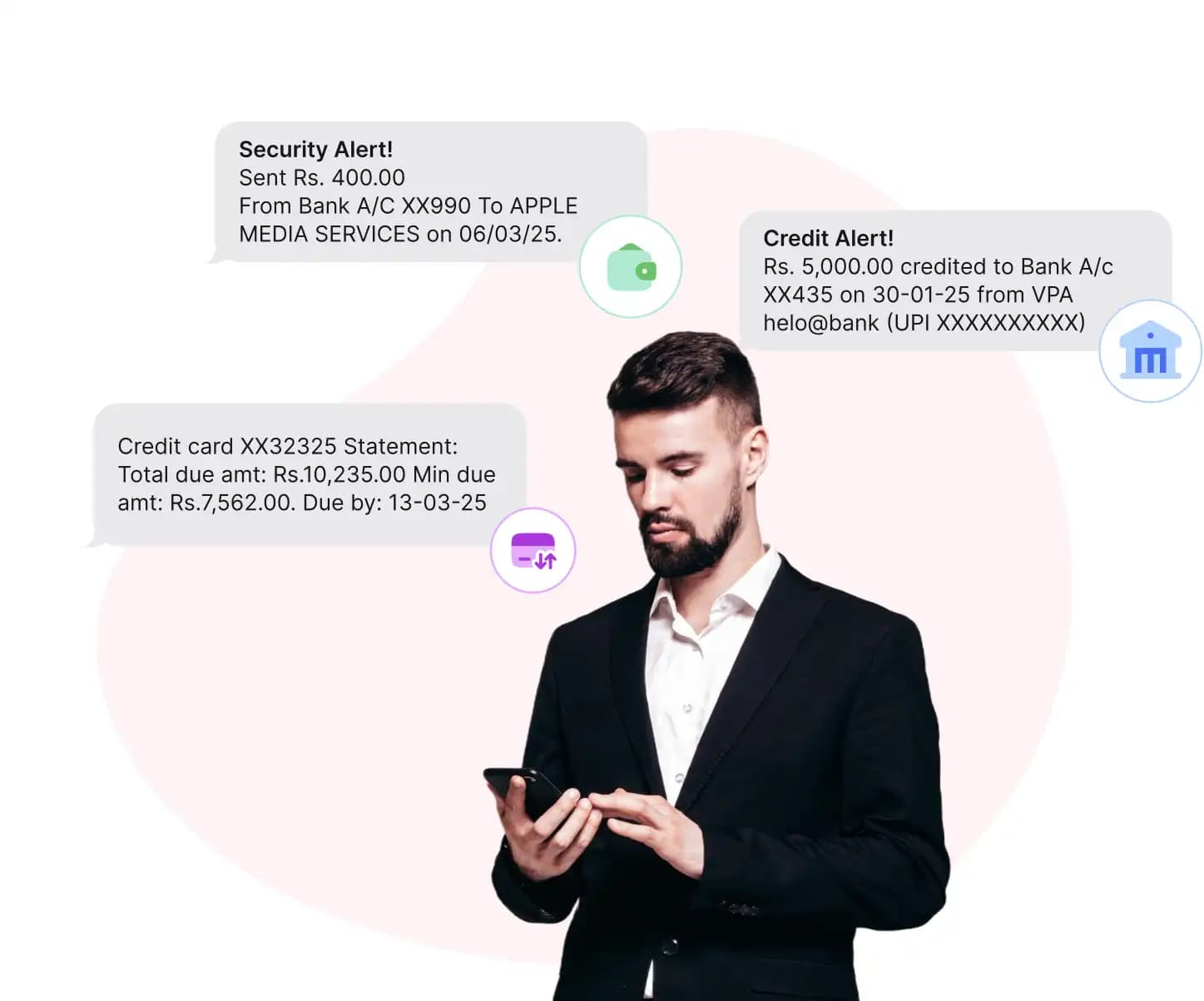
RCS OTP is more resistant to sender-side spoofing specifically because Google verifies the business identity before any message sends- a checkmark badge and logo appear next to the code. SMS OTP has no equivalent verification step, which is why fake-bank smishing texts remain a common fraud pattern. Neither channel encrypts the code differently, so the security gain is about sender trust, not the code itself.
Yes, with a caveat- RCS OTP's verified sender badge is a meaningful trust and fraud-prevention enhancement that banks, NBFCs, and fintechs increasingly value for authentication messages, but it is not itself a formal compliance certification. It sits on top of whatever RBI or internal 2FA compliance framework the business already follows, rather than replacing it.
Get Click Media's platform detects this automatically and re-routes the same one-time code as standard SMS, so authentication is never blocked by device or carrier support. This fallback is configured once at the account level, not per API request.
Yes- under normal conditions both channels deliver in seconds. Delivery speed itself isn't really the differentiator between RCS and SMS OTP; both are built for time-sensitive codes, and the meaningful difference is the verified trust signal RCS carries, not raw speed.
SMS sender IDs, whether numeric or alphanumeric, have no verification step, so fraudsters can register lookalike sender IDs or spoof them outright- this is the basis of smishing attacks that mimic bank OTP texts. RCS closes this specific gap with Google's brand verification, which confirms sender identity before a message can be sent under your business name.
No. RCS OTP's verified badge reduces the risk of sender impersonation, but it doesn't replace device binding, rate limiting, transaction monitoring, or other layers a mature authentication stack already uses. Treat it as one additional signal, not a complete fraud solution on its own.
No- both are priced per message in a similar range for transactional sends. This isn't a cost-driven decision the way bulk promotional messaging can be; see our OTP SMS Pricing and RCS Pricing India pages for current rates before comparing.
That's how Get Click Media's platform runs by default- RCS is attempted first for the verified experience, with automatic SMS fallback underneath so you get RCS's trust signal where available and SMS's universal reach everywhere else, through a single integration.
No- it specifically addresses sender-identity spoofing, the mechanism behind most fake-bank OTP smishing texts. It doesn't prevent a customer from being socially engineered into reading a genuine code aloud to a scammer, which is a separate risk that verification alone can't solve.
Google brand verification and sender setup are handled as part of onboarding, and RCS OTP integrates through the same RCS API pattern used for other transactional sends, with SMS fallback configured once at the account level. See our RCS OTP page for the full delivery workflow.
Related resources
RCS resources
Still deciding between RCS OTP and plain SMS OTP?
Get Click Media runs both channels on one platform- book a free demo and we'll map out a secure authentication setup for your business.