
RCS vs Instagram DM: Proactive Reach vs Reactive Social Messaging
No opt-in wait, and no waiting for the customer to message first- see where RCS's proactive, verified reach pulls ahead of Instagram DM's reactive, engagement-gated model, and where Instagram's social reach still earns its place in the mix.
Trusted by 10,000+ businesses across India
Trusted by 10,000+ businesses across India


















RCS vs Instagram DM: The Short Version
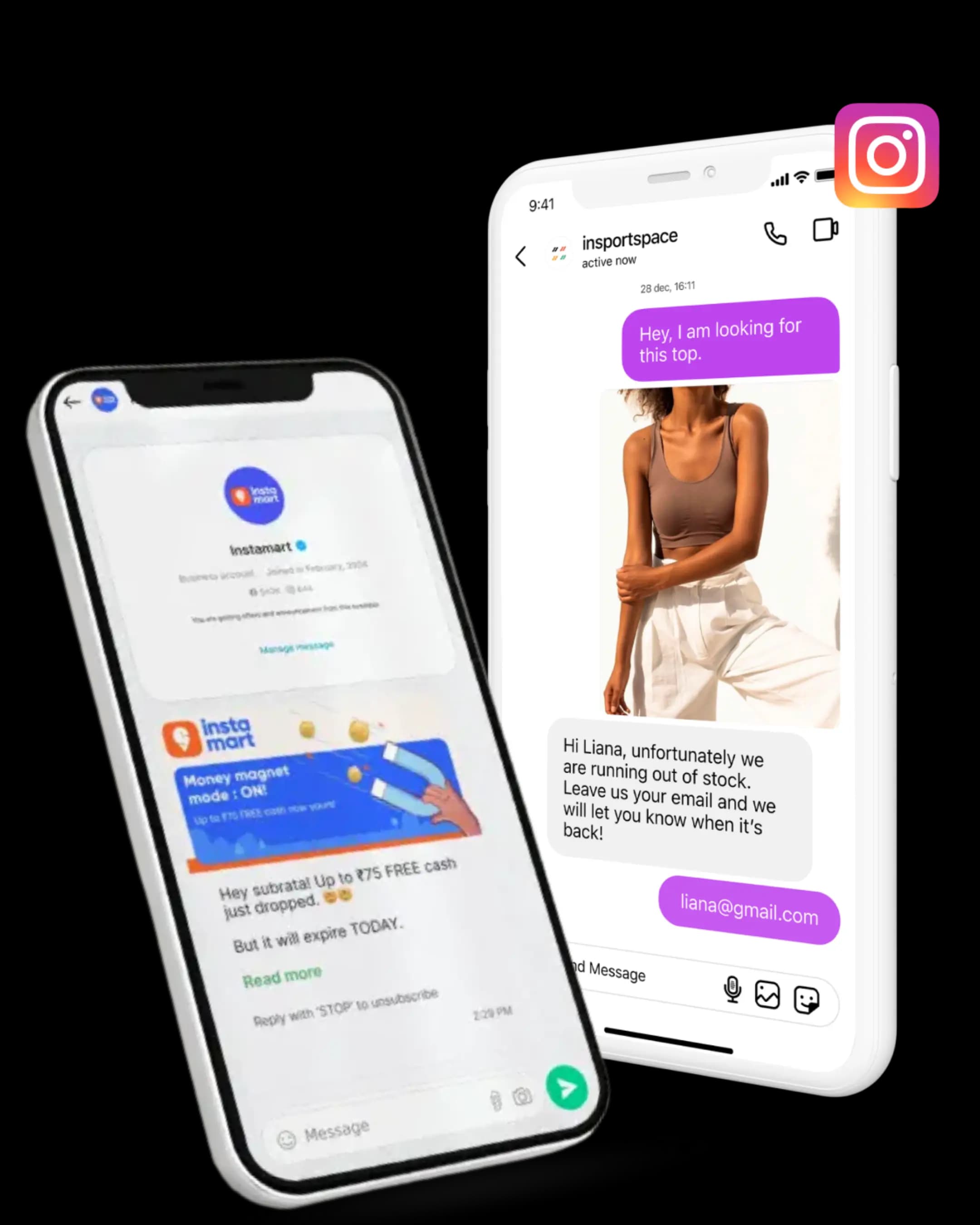
The core difference is proactive versus reactive messaging. RCS can message an existing customer list directly through Google Messages with no prior opt-in, and carries a Google-verified sender badge on every send. Instagram DM can only reply once a customer has already messaged first, replied to a Story, or clicked through a qualifying ad- there is no way for a business to start a fresh conversation, and Instagram's blue check verifies profile notability, not who sent a given DM.
Pick RCS for proactive outreach to a customer list, OTPs, and transactional alerts that need to go out without waiting to be messaged first. Instagram DM fits better for replying to inbound interest generated by posts, Reels, Stories, and ads, especially for shopping-led brands using catalog cards once a conversation is open. Most Get Click Media clients run RCS for proactive campaigns and Instagram DM for converting inbound social interest, side by side.
RCS Business Messaging, in One Paragraph
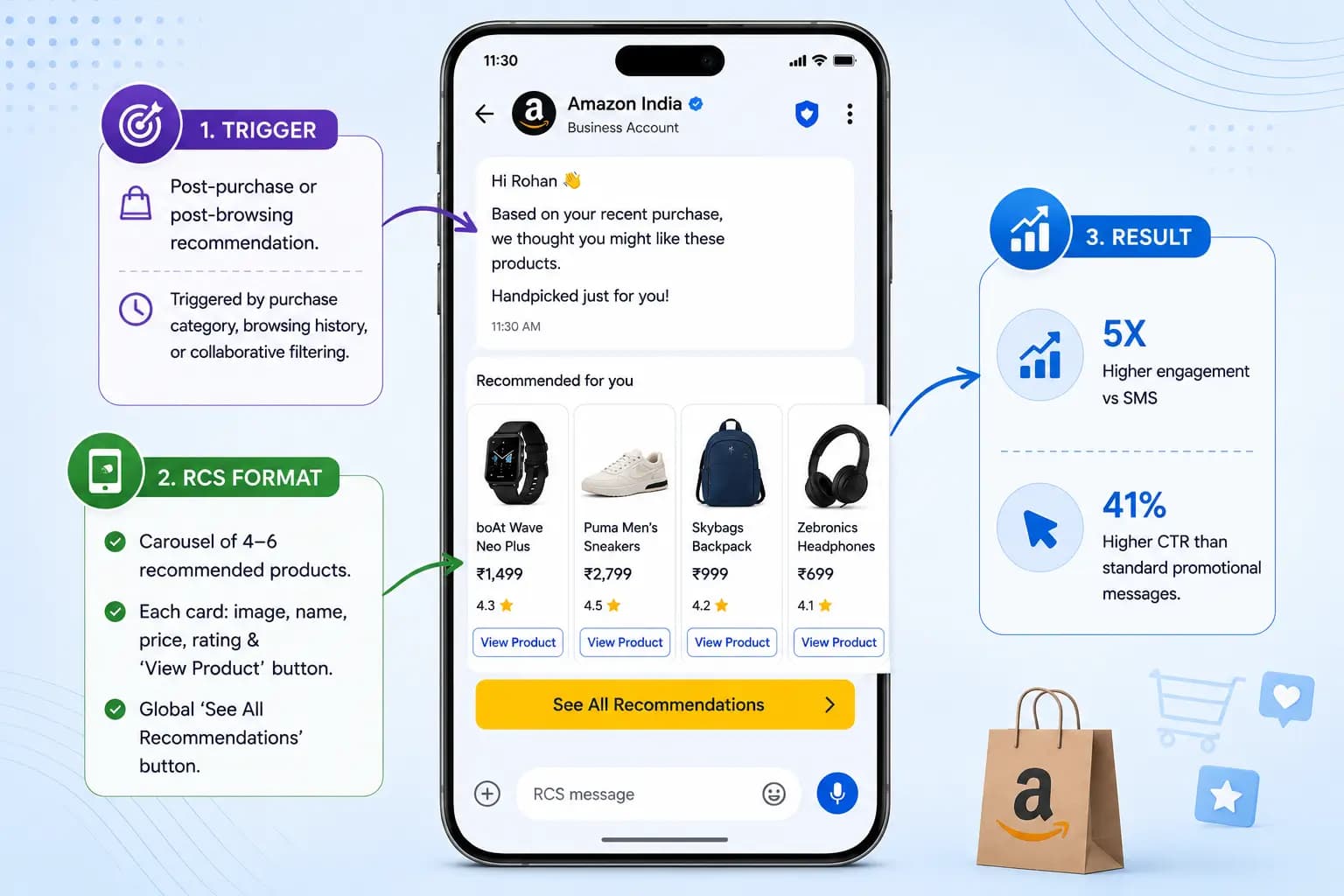
RCS (Rich Communication Services) is Google's modern messaging standard, built directly into the Google Messages app that ships as the default SMS/messaging app on most Android phones. A business can send a Google-verified, rich-media message- images, carousels, CTA buttons- straight into a customer's existing message thread, with no app download and no prior engagement required from the customer before you can start the conversation.
Instagram Direct Messaging, in One Paragraph
Instagram DM is Instagram's direct-messaging feature, and Meta makes it programmatically accessible to businesses through the Instagram Messaging API (via the Graph API and Meta Business Suite) for accounts with an Instagram professional profile. It's a genuinely useful channel for replying to customers who message about a product they saw- but a business can only enter a conversation after the customer has messaged first, replied to a Story, or arrived through a qualifying ad entry point. There is no standard way to message a customer who hasn't engaged first.
RCS vs Instagram DM, Feature by Feature
| Feature | RCS | Instagram DM |
|---|---|---|
| Business-initiated messaging | ✅ | ❌ (user must message first, reply to a Story, or click an ad entry point) |
| Rich Images | ✅ | ✅ (once a conversation is open) |
| Carousels | ✅ | Generic templates/product cards only, via the Messaging API |
| CTA Buttons | ✅ | ✅ (quick replies, reply-only use) |
| Verified Brand | ✅ (Google) | ❌ (Instagram's blue check is a separate, eligibility-gated program) |
| Read Receipts | ✅ | ✅ (within an open conversation) |
| Analytics | ✅ | Varies by integration/tooling |
| API Integration | ✅ (open, documented) | ✅ (Meta Graph API- Instagram Messaging API) |
| Customer Experience | High | High for inbound/DM-led commerce, limited for outbound |
RCS vs Instagram DM Opt-In Process
This is the biggest practical difference between the two channels. RCS can reach a customer within Google's content guidelines without a separate opt-in step, since it lives inside their default messaging app already. Instagram DM flips this entirely- a business can only reply once the customer has already messaged, replied to a Story, or arrived through a qualifying entry point.
| Aspect | RCS | Instagram DM |
|---|---|---|
| Getting started | No customer action needed- RCS is native to Google Messages on any RCS-capable Android device, on by default for most users. | A business can only enter a conversation after the customer sends the first DM, replies to a Story, or clicks through from a qualifying ad or entry point into Instagram- there's no cold, business-initiated path in. |
| Opt-out handling | Follows standard carrier-level messaging opt-out, similar to SMS. | Users can mute, restrict, or block a business account at any time, governed by Meta's messaging policies for the Instagram Messaging API. |
| First message | Can send within Google's RCS Business Messaging content guidelines without a prior opt-in message thread. | A business can never send the first message in a brand-new conversation- outbound messaging exists only as a reply once the customer has already engaged. |
RCS vs Instagram DM Conversation Model
RCS treats every send as an individual message. Instagram DM structures conversations around a 24-hour standard messaging window once a customer has opened one, with only a narrow set of message tags covering limited use cases outside it- a structural difference that affects how, and when, you can respond to a customer at all.
| Aspect | RCS | Instagram DM |
|---|---|---|
| Message structure | Priced and sent as individual messages- each send is its own unit. | Structured around a 24-hour standard messaging window once a conversation is open, similar in shape to Messenger's window under the same Meta messaging policy framework. |
| Template requirement | No template pre-approval needed for standard rich cards within guidelines. | A narrow set of message tags cover limited post-window use cases, but there's nothing like a broad, business-initiated template-approval system for starting new contact. |
| Session window | No equivalent session window- each RCS message stands alone. | The 24-hour window resets each time the customer sends a new message, allowing free-form replies within it- outside it, only the narrow tagged exceptions apply. |
Why "Instagram DM Pricing" Isn't a Like-for-Like Comparison
RCS is priced per message sent through a documented Business Messaging API, the same way SMS is. Meta doesn't bill per message for the Instagram Messaging API itself, so there's no comparable rate card to weigh against RCS's per-message pricing- the real cost of an Instagram DM strategy is the agency, tooling, and ad spend needed to drive customers into your DMs in the first place, not a transparent messaging fee. See our RCS Pricing India page for current RCS rates before weighing the two against your budget.
Two Rich Channels, Gated Very Differently
Rich cards vs generic templates
RCS renders swipeable rich cards natively in the message thread. Instagram DM supports generic templates and product cards through the Messaging API, but only once a conversation is already open.
Product & catalog cards
Instagram Shopping-linked catalog cards work well for a shopping-led brand once a conversation is open- genuinely useful, but they're a reply tool, not a way to reach a cold audience the way an RCS card can.
Quick replies & CTA buttons
Both support tappable buttons- RCS ties these to its core message format, Instagram DM to bot-built quick replies that only function within its stricter, reply-only engagement gate.
Read receipts & typing indicators
Both channels show read receipts and typing indicators within an active thread, giving businesses real-time visibility into message status once a conversation is underway.
RCS vs Instagram DM Reach: Proactive vs Reactive
This is the single most important difference on this page. Instagram DM can only message a customer who has already engaged- messaged first, replied to a Story, or clicked through an ad. RCS works natively inside Google Messages and can message an existing customer list directly, with no requirement that the customer reach out first.
| Aspect | RCS | Instagram DM |
|---|---|---|
| App requirement | None- works inside the default Google Messages app that ships on Android, no download or install. | Customer must have Instagram installed or accessible, and must be the one to initiate contact- a business can't reach a non-engaged user's DM inbox at all. |
| Initiation requirement | No opt-in or prior engagement needed to receive an RCS message on a supported device. | The customer must message first, reply to a Story, or arrive through a qualifying ad entry point- there is no business-initiated cold outreach. |
| Existing customer lists | Can proactively message an existing customer list directly, at any time. | Cannot message an existing customer list unless each individual customer has already opened a DM conversation- fundamentally reactive, not a proactive broadcast channel. |
| Device/OS reach | Native on RCS-capable Android devices; falls back to SMS elsewhere. | Cross-platform wherever Instagram is installed and active, but limited to the subset of your audience that engages with your account first. |
No app install for RCS
RCS lives inside Google Messages by default on supported Android devices- there's no separate download or account creation step for the customer.
Instagram's reach in India
Instagram has a very large and fast-growing user base in India, especially among younger and urban audiences, and is extremely strong for social discovery and DM-initiated commerce.
Reactive vs proactive
The single most important structural difference on this page: Instagram DM only ever replies to a conversation the customer started. RCS can proactively message an existing customer list without waiting to be messaged first.
Combined reach strategy
Pairing RCS for proactive campaigns to an existing customer list with Instagram DM for inbound, ad- or Story-driven conversations covers both directions of the funnel.
Google's RCS Verification vs Instagram's Blue Check
Google verifies and badges RCS senders as part of RCS Brand Verification, confirming your business name and logo before messages carry the checkmark- every verified send carries that trust signal. Instagram's blue check is a different kind of program entirely: it verifies a profile's notability, largely reserved for celebrities, public figures, and select larger brands, and it has nothing to do with verifying who actually sent a given DM. There is no equivalent to RCS's sender verification for a typical business's Instagram DMs.
| Aspect | RCS | Instagram DM |
|---|---|---|
| Verifying authority | Google reviews and verifies the business identity for RCS Business Messaging. | Meta's separate blue-check verification program, largely reserved for celebrities, public figures, and select larger brands- not a messaging-specific trust signal. |
| What the badge shows | Verified business name, logo, and a checkmark inside Google Messages. | A blue checkmark on the profile itself, unrelated to who is actually sending a given DM or whether that message's content is verified. |
| Approval eligibility | Verification managed through the RCS Business Messaging partner process- see our RCS Brand Verification page. | Eligibility-gated toward notable accounts- most small and mid-size businesses simply aren't eligible to apply, regardless of how they message customers. |
| Effect on trust | Verified badge appears on every message from day one of approval. | No equivalent per-message sender verification exists- even a verified profile badge, where granted, doesn't confirm the authenticity of an individual DM the way RCS verification does for message senders. |
Campaign Visibility on Both Channels
RCS campaigns through Get Click Media's RCS Analytics report read receipts, button-tap tracking, and carousel engagement in one dashboard. Instagram DM reporting depends entirely on which tooling or agency partner you use to manage the Messaging API integration- depth and consistency vary widely, whereas RCS reporting through Get Click Media stays consistent across every campaign.
Two Programmatic Channels, One Platform to Manage Both
Both channels are programmatic. The Get Click Media RCS API sends rich cards, carousels, and buttons to any existing customer without a template pre-approval step for standard content. The Instagram Messaging API (via Meta's Graph API) lets a business reply to inbound conversations with quick replies and product cards, but it can never initiate a new one- integration effort there goes into handling and routing inbound DMs, not sending outbound campaigns. Get Click Media integrates RCS under one account, so your proactive messaging isn't dependent on a channel that can only ever reply.
When RCS Wins, When Instagram DM Wins
RCS fits best for
- Proactive campaigns to an existing customer list
- OTPs and transactional alerts needing instant, opt-in-free reach
- Order tracking and delivery updates without a template approval cycle
- Brands wanting Google-verified sending with no per-conversation billing
Instagram DM fits best for
- Replying to customers who DM about a post, Reel, or Story
- Shopping-led brands using Instagram Shopping catalog cards in replies
- Converting ad-driven or Story-driven inbound interest into a sale
- Audiences already active and discovering products on Instagram
Which is Better, RCS or Instagram DM? Honest Trade-offs
RCS
No app install or opt-in required on supported Android devices
Can proactively message an existing customer list at any time
Google-verified branding and checkmark
No per-conversation pricing- priced per message sent
No template pre-approval needed for standard messages
Automatic SMS fallback for unsupported devices
iOS support still maturing compared to Android
Full rich-media experience needs an RCS-capable device
Smaller installed-habit base than Instagram in India for social browsing
Instagram DM
Very large and growing user base in India, especially younger/urban audiences
Strong for social discovery- a customer can DM about a product seen in a post, Reel, or Story
Product/catalog cards via Instagram Shopping integration for shopping-led brands
Quick replies and generic templates available through the Messaging API
No Meta messaging fee for the API itself- cost sits in tooling/ad spend, not per-send billing
Cannot send the first message- a business can only reply once the customer has already engaged
No way to proactively message an existing customer list the way RCS or SMS can
No sender-identity verification for DM content- Instagram's blue check is a separate, eligibility-gated program unrelated to messaging trust
Only a narrow set of tagged exceptions allow messaging outside the 24-hour window
Real cost is agency/tooling/ad spend to drive users into DM, not a transparent per-message rate
A Simple Decision Matrix
Choose RCS if you want...
- To proactively message an existing customer list, not just reply
- Reach without requiring a customer to engage first
- Simple per-message pricing, not agency and ad-spend costs
- Google-verified branding on every message you send
Choose Instagram DM if you want...
- To convert inbound interest from posts, Reels, and Stories into sales
- Product/catalog cards inside replies for shopping-led browsing
- A channel that meets younger, social-first Indian audiences where they are
- To accept that outbound to non-engaged customers isn't possible
Most Get Click Media clients run RCS and Instagram DM side by side- RCS for proactive campaigns to their existing customer list, Instagram DM for converting the inbound interest their social content already generates.
A Proactive Channel That Doesn't Wait to Be Messaged First
Trusted by 10,000+ businesses across India for messaging infrastructure that reaches customers directly, instead of waiting for them to start the conversation.
Verification handled for you
Google's RCS verification is managed as part of onboarding, so your messages carry a verified identity from day one.
Proactive and reactive, together
Run proactive RCS campaigns alongside your Instagram DM inbound flow, instead of relying on a single reply-only channel.
Consistent analytics
See RCS delivery, read, and engagement data in one dashboard, independent of whichever tooling manages your Instagram DM replies.
One API for proactive reach
Integrate once through the Get Click Media RCS API and message your existing customer list without waiting for them to message you first.
Tired of waiting for customers to message first?
Talk to our experts about running RCS as your proactive channel alongside Instagram DM's inbound conversations.


Largest CPaaS partner globally
Get Click Media enables brands to move beyond reply-only Instagram DM with proactive, verified RCS messaging that reaches every Android user natively.

One message could
change your business.
Big or small, we power communication for all- talk to us today.
RCS vs Instagram DM FAQs
For proactive outreach, yes- RCS can message an existing customer list directly, with no requirement that the customer message you first. Instagram DM is genuinely strong for reactive, DM-initiated commerce (a customer messaging about a product they saw), but it structurally can't replace a proactive messaging channel. Most businesses use both for different jobs.
No, not through the standard Instagram Messaging API. A business can only reply once the customer has sent the first DM, replied to a Story, or arrived through a qualifying ad or entry point into Instagram. There's no cold, business-initiated outbound the way RCS or WhatsApp templates allow.
No. RCS works inside Google Messages, the default messaging app on Android, and has nothing to do with Instagram at all- a customer doesn't need an Instagram account, a follow relationship, or any prior engagement to receive an RCS message.
Instagram DM supports generic templates and product/catalog cards through the Messaging API, especially useful for Instagram Shopping-linked brands, but these are reply tools available only once a conversation is already open- not a native rich-card format businesses can send cold, the way RCS cards work.
Once a customer opens a conversation, a business can generally reply freely within a 24-hour standard messaging window, structurally similar to Messenger's window under the same Meta messaging policy framework. A narrow set of message tags allow limited use cases outside that window, but there's no broad template system for initiating new contact the way WhatsApp has.
Not really. Instagram's blue-check verification is a separate program, largely reserved for celebrities, public figures, and select larger brands, and it doesn't verify sender identity for DM content the way Google's RCS brand verification does for every message a verified RCS sender sends.
Yes, and this is the pattern most businesses land on- RCS for proactive campaigns to an existing customer list, Instagram DM for inbound conversations driven by posts, Reels, Stories, and ads, both feeding into the same customer engagement strategy.
RCS. Instagram DM has no mechanism for a business to message an existing customer list proactively- it can only reply to conversations the customer initiates. RCS was built for exactly this use case, sending rich, verified messages to a customer list without waiting to be messaged first.
It's an apples-to-oranges comparison. RCS is priced per message sent- see our RCS Pricing India page for current rates. Meta doesn't bill per message for the Instagram Messaging API itself; the real cost of an Instagram DM strategy is agency, tooling, and ad spend to drive customers into your DMs in the first place, not a transparent per-send rate card.
We assess whether your business needs proactive outreach to an existing customer list, reactive DM-led commerce, or both, then recommend a channel mix- often RCS and Instagram DM together- and handle brand verification and API integration for whichever combination fits your business.
Related resources
RCS resources
Still deciding between RCS and Instagram DM?
Get Click Media runs proactive RCS messaging alongside your Instagram DM strategy- book a free demo and we'll map out the right mix for your business.