
RCS vs Email Marketing: Which Channel Drives Better Customer Engagement?
Read receipts vs inflated open-pixel estimates, one-tap CTA buttons vs plain hyperlinks, and a verified sender vs a spam-folder gamble- see exactly where RCS out-performs email marketing on mobile engagement, and where email still earns its place for long-form content.
Trusted by 10,000+ businesses across India
Trusted by 10,000+ businesses across India

















RCS vs Email Marketing: The Short Version
RCS out-performs email marketing on measurable, trustworthy engagement. Get Click Media RCS campaigns report 70%+ read rates confirmed by an actual read receipt, against a typical 15-25% email open rate that Apple Mail Privacy Protection and Gmail's image proxy now inflate before a human even opens the message. RCS also adds a Google-verified sender badge and one-tap CTA buttons, where email inbox placement still depends on sender reputation and SPF/DKIM/DMARC configuration.
Email keeps the edge for long-form content: newsletters, detailed policy documents, and campaigns that need full HTML design control aren't what a rich card is built for. Businesses should lead with RCS for time-sensitive, action-oriented messages- order alerts, reminders, offers- and keep email for long-form communication. Most Get Click Media clients run both channels together rather than replacing one with the other.
RCS Business Messaging, in One Paragraph
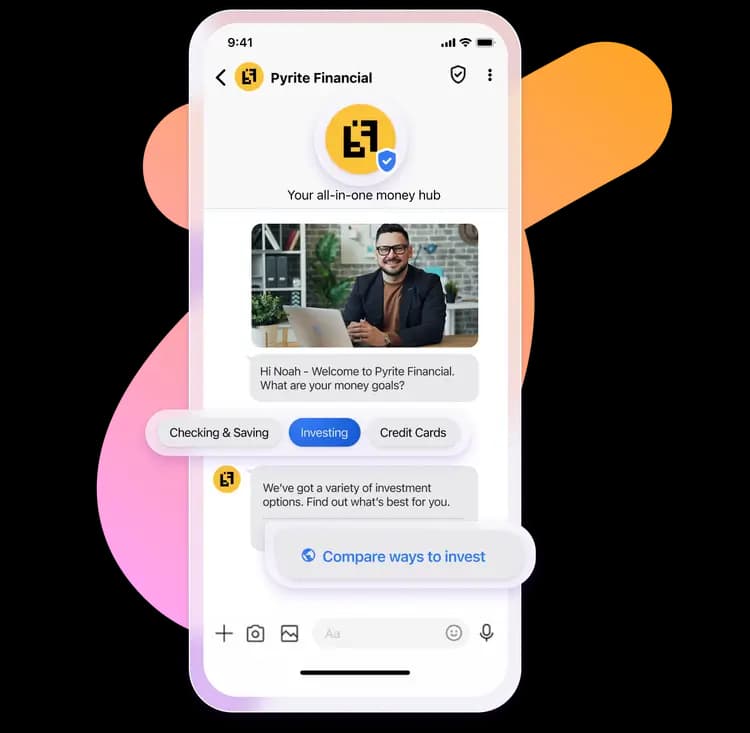
RCS (Rich Communication Services) is the modern successor to SMS, built into Google Messages on Android. It delivers verified-brand messages with images, carousels, suggested replies, and tappable action buttons- inside the customer's default messaging app, with no separate inbox, no subject-line guesswork, and no image-proxy layer sitting between the send and the read receipt. Get Click Media handles brand verification and delivery infrastructure end to end.
Email Marketing, Still the Long-Form Standard
Email marketing sends HTML or plain-text messages through an Email Service Provider (ESP) such as Mailchimp or SendGrid, typically billed per-subscriber or per-month rather than per-message. It supports rich design and long-form layouts- newsletters, digests, detailed offers- but inbox placement depends on sender reputation and correctly configured SPF/DKIM/DMARC records, and its open-rate tracking has grown increasingly unreliable since Apple and Gmail introduced privacy features that pre-fetch tracking pixels automatically.
RCS vs Email Marketing, Feature by Feature
Email isn't short on rich media- it has supported images and HTML layouts for decades. The real gap is trust and measurement: a verified badge vs a configuration checklist, and a read receipt vs a tracking pixel.
| Feature | RCS | Email Marketing |
|---|---|---|
| Rich Images | ✅ | ✅ (rendering varies by client) |
| Carousels | ✅ | ❌ |
| CTA Buttons | ✅ | ✅ (links, not native buttons) |
| Verified Brand | ✅ | Varies (SPF/DKIM/DMARC, not a visible badge) |
| Read Receipts | ✅ | ❌ (open tracking is unreliable/inflated) |
| Analytics | ✅ | ✅ (but open-rate data is distorted by privacy features) |
| API Integration | ✅ | ✅ |
| Customer Experience | High (mobile-native) | Medium (desktop-oriented, mobile rendering varies) |
What RCS Costs vs Email Marketing
Email marketing is typically priced per-subscriber or per-month through an ESP like Mailchimp or SendGrid, largely independent of how many sends you make within your plan. RCS is priced per message. Which works out cheaper depends on your list size and send frequency- what usually matters more is cost per conversion, where a higher, more reliably measured RCS engagement rate can lower the effective cost even at a comparable per-message price. See our RCS Pricing India page for current rates.
Media Isn't Email's Real Weakness
To be fair to email: it supports images, embedded design, and rich HTML just fine. Its real limitation is inbox placement and rendering consistency, not a lack of media richness.
Rich cards render natively
RCS rich cards display inline images and layouts inside Google Messages- no rendering engine guesswork the way HTML email faces across clients.
Tappable buttons vs hyperlinks
Suggested-reply and CTA buttons complete an action in one tap- email still relies on a plain hyperlink the recipient has to click and wait to load.
Consistent mobile-native rendering
A rich card looks the same on every Android device. An HTML email can render cleanly in Gmail and break entirely in Outlook mobile.
Read receipts vs opaque tracking pixels
RCS confirms an actual read on-device. Email's 'open' event is a tracking pixel- one that privacy features now routinely fire without a human involved.
RCS vs Email Open Rate and CTR, Honestly Compared
This is the crux of the RCS vs email marketing debate- and it starts with admitting that email's headline open-rate number is no longer trustworthy on its own. Apple Mail Privacy Protection and Gmail's image-proxy caching both pre-fetch tracking pixels automatically, which inflates and distorts what an "open" actually measures. RCS read receipts don't have that problem- they reflect an actual read on the recipient's device. Our Customer Engagement Platform tracks both channels side by side so you can see the difference for yourself.
| Aspect | Email Marketing | RCS |
|---|---|---|
| Reported open rate | ~15-25% typical industry average- and even that figure is inflated by Apple Mail Privacy Protection auto-loading images and Gmail's image-proxy pre-fetching before a human ever sees the message. | 70%+ read rate reported across Get Click Media RCS campaigns, confirmed by an actual read receipt rather than a tracking-pixel estimate. |
| Click-through rate | ~2-3% typical industry average- a hyperlink competing for attention inside a crowded, largely unread inbox. | Meaningfully higher than typical email CTR in Get Click Media campaigns, though the exact multiplier varies by industry and list health- unlike the well-documented 3-5x figure RCS carries over SMS, there isn't yet an equally standardised 'RCS vs email' benchmark to quote. |
| Measurement reliability | Distorted- Apple MPP and Gmail's image proxy pre-fetch tracking pixels automatically, so 'opened' increasingly means 'received by a privacy proxy,' not 'read by a person.' | Direct- a read receipt reflects an actual open on the recipient's device, the same signal any modern chat app relies on. |
| Inbox placement | Not guaranteed- spam-folder filtering depends on sender reputation and correctly configured SPF/DKIM/DMARC records. | Delivered inside Google Messages, the recipient's default app- no separate spam-folder equivalent to be filtered into. |
70%+ read rate on RCS
Reported across Get Click Media RCS campaigns- well above the ~15-25% typical of email, before even accounting for how inflated that email figure often is.
CTR that isn't hidden behind a pixel
A tap on an RCS CTA button is an unambiguous action- no tracking-pixel proxy layer sitting between the send and the measurement.
Verified sender, not an anonymous 'from'
A Google-verified badge confirms who sent the message, something no email 'From' field does on its own.
Lives in the primary inbox, not a tab
RCS delivers straight into Google Messages- no Promotions tab, no spam-folder detour, no competing with hundreds of unread emails.
A Verified Badge vs a Spam-Folder Gamble
Email has a well-known, decades-old spam-folder problem. Whether a campaign lands in the inbox or gets filtered out depends on sender reputation and correctly configured SPF, DKIM, and DMARC records- a technical setup with no visible trust signal to the recipient, and one that a single reputation slip can undo. RCS replaces that with a Google-verified business badge that confirms sender identity before a message goes out, with no equivalent spam-folder risk on the receiving end.
Reporting You Can Actually Trust
Most ESPs report opens, clicks, and unsubscribes- but the open-rate figure at the centre of that report is exactly the metric privacy features have made unreliable. RCS campaigns through Get Click Media's RCS Analytics add read receipts, button-tap tracking, and carousel engagement data- signals that reflect what a recipient actually did, not what a tracking-pixel proxy pre-fetched on their behalf.
Trigger From the Same Events, Different Payload
If your systems already call an ESP API to trigger transactional or campaign email, adding RCS is a payload change, not a rebuild- the Get Click Media RCS API accepts fields for rich cards, buttons, and carousels on top of the same event-driven trigger pattern most ESP integrations already use, so the two channels can fire from the same backend logic.
Where RCS Wins, Where Email Still Wins
Mobile-First & Time-Sensitive Messaging
Order alerts, appointment reminders, and flash offers all share one trait- they lose value the longer they sit unread. RCS is built for exactly that moment, landing directly in the customer's default messaging app. See our RCS Marketing Campaigns page for how businesses structure these sends.
| Aspect | Email Marketing | RCS |
|---|---|---|
| Time-sensitive alerts | Order confirmations and reminders often sit unopened in an inbox until the recipient happens to check email. | Typically read within minutes- RCS lives in the same app people already use for everyday texting. |
| One-tap actions | A recipient has to tap a link, then wait for a page or app to load before completing anything. | Suggested-reply and CTA buttons complete the action- confirm, reschedule, track- without leaving the message thread. |
| Campaign setup | Requires HTML template design and cross-client testing across Outlook, Gmail, and Apple Mail, which all render differently. | Rich cards render consistently inside Google Messages- see our RCS Marketing Campaigns page for setup examples. |
Long-Form & Design-Heavy Communications
Newsletters, detailed policy documents, and campaigns that need extensive visual design still belong in a customer's email inbox- a rich card isn't built to replace a full HTML layout, and no one should try to force it to.
| Aspect | Email Marketing | RCS |
|---|---|---|
| Newsletters & digests | Purpose-built for long-form layouts- multiple stories, sections, and images in a single send. | Not designed for long-form reading- a rich card is built for a quick glance and a single action, not a multi-section digest. |
| Policy & compliance documents | Supports detailed formatting, embedded terms, and attachments where a full document needs to travel with the message. | Better suited to a short notice with a link out to the full document than to carrying dense legal text itself. |
| Design flexibility | Full HTML/CSS control for brand-heavy campaigns, at the cost of inconsistent rendering across email clients. | Consistent but comparatively fixed rich-card layout- less creative latitude than a fully custom HTML template. |
Why Choose RCS Over Email- and When Not To
RCS
Read receipts as a real engagement signal, not an inflated open-pixel estimate
70%+ read rate reported across Get Click Media RCS campaigns
Rich cards, carousels, and one-tap CTA buttons render consistently in Google Messages
Google-verified sender badge with no spam-folder equivalent
No SPF/DKIM/DMARC configuration required to land in the inbox
Native to Android's default messaging app- no competing with a crowded inbox
Requires Google brand verification (5-7 days)
Best rich-media experience is Android-first, though iOS RCS support is expanding
Not built for long-form content like newsletters or detailed documents
Email Marketing
Works across every device and platform, no OS dependency
Best channel for long-form content- newsletters, policy documents, detailed offers
Decades of marketing-team tooling (Mailchimp, SendGrid, HubSpot, and similar ESPs)
Full HTML design flexibility for brand-heavy campaigns
No per-message send cost at typical ESP subscription tiers
Open-rate tracking is unreliable- Apple Mail Privacy Protection and Gmail's image proxy inflate or distort the numbers
Deliverability depends on sender reputation and correctly configured SPF/DKIM/DMARC records
Spam-folder placement is a persistent, decades-old risk with no visible trust badge
Rendering varies significantly across email clients (Outlook, Gmail, Apple Mail)
Typical CTR runs ~2-3%, competing against a full inbox of other senders
A Simple Decision Matrix
Choose RCS if you want...
- A read-rate signal you can actually trust
- Faster action on time-sensitive alerts and offers
- A verified sender badge with no spam-folder risk
- One-tap CTA buttons instead of a hyperlink to click
- Consistent rendering with no cross-client testing
Choose Email Marketing if you want...
- Long-form newsletters or multi-section digests
- Full HTML/CSS design control over the message
- Detailed policy documents or terms attached to the send
- No per-message send cost within your ESP plan
- Reach that doesn't depend on an Android device
Most Get Click Media clients don't pick one over the other- they run email for long-form communication and RCS for time-sensitive engagement, orchestrated through one Customer Engagement Platform instead of two disconnected tools.
One Platform for RCS and Email Together
Trusted by 10,000+ businesses across India for engagement infrastructure that doesn't force a choice between reliable measurement and long-form reach.
Brand verification handled for you
Google's RCS verification review is managed as part of onboarding, so your messages carry a verified identity from day one.
RCS and email, orchestrated together
Run time-sensitive RCS alerts alongside long-form email campaigns from one account, not two disconnected tools.
Analytics that aren't distorted by privacy features
See RCS read receipts and email performance side by side, without treating an inflated open-pixel count as ground truth.
One API, both channels
Integrate once through the Get Click Media API and trigger RCS or email sends from the same backend logic.
Ready to move beyond unreliable open rates?
Talk to our experts about adding verified, read-receipt-backed RCS messaging alongside your existing email marketing.


Largest CPaaS partner globally
Get Click Media enables brands to move beyond unreliable email opens with verified, read-receipt-backed RCS messaging.

One message could
change your business.
Big or small, we power communication for all- talk to us today.
RCS vs Email Marketing FAQs
For mobile-first, time-sensitive engagement, yes- RCS typically delivers a far higher read rate and a more directly measurable click-through than email, thanks to read receipts and a verified sender badge. Email still wins for long-form content and campaigns that need full design control, so the honest answer is 'better for engagement, not a full replacement.'
No, and Get Click Media doesn't recommend trying to fully replace it. RCS excels at short, action-oriented messages- order updates, offers, reminders- while email remains the better channel for newsletters, detailed policy communication, and campaigns that need rich design. Most businesses run both.
Apple Mail Privacy Protection automatically pre-fetches images for many inboxes, registering an 'open' the moment a message arrives- whether or not a human reads it. Gmail's image-proxy caching behaves similarly. Both inflate and distort what an 'open' actually measures, which is why RCS read receipts- a direct signal from the recipient's device- are considered more trustworthy.
Yes- this is how most Get Click Media clients run it. Email handles newsletters and long-form communication; RCS handles time-sensitive alerts, offers, and order updates that benefit from a higher, more reliably measured read rate. Our Customer Engagement Platform is built to orchestrate both from one place.
It depends on scale and channel. Email marketing is typically priced per-subscriber/month through an ESP like Mailchimp or SendGrid, while RCS is priced per message. See our RCS Pricing India page for current rates and compare against your ESP's subscription tier.
Not in the same way. Email inbox placement depends on sender reputation and correctly configured SPF/DKIM/DMARC records, and even well-configured senders can still land in spam. RCS messages carry a Google-verified sender badge and deliver inside Google Messages with no equivalent spam-folder risk.
Yes, though the two formats serve different purposes. RCS rich cards support inline images, carousels, and CTA buttons built for a quick glance and a single tap. Email supports fuller HTML layouts better suited to multi-section newsletters. Neither is 'less rich'- they're built for different reading contexts.
RCS click-through in Get Click Media campaigns typically runs several times higher than the ~2-3% industry-average email CTR, though the exact multiplier varies by industry and list health- there isn't yet a standardised 'RCS vs email' benchmark the way there is for RCS vs SMS.
No. Those records govern email sender-domain trust and inbox placement. RCS uses Google's own brand-verification review instead, which confirms your business identity once and applies a verified badge to every message- see our RCS Brand Verification page for how that process works.
As a rule of thumb: RCS for anything time-sensitive or action-oriented- order alerts, appointment reminders, flash offers- and email for long-form content- newsletters, detailed policy updates, campaigns needing heavy design. See our RCS Marketing Campaigns page for examples of where RCS fits best.
Related resources
RCS resources
Still deciding between RCS and email marketing?
Get Click Media runs both channels on one platform- book a free demo and we'll map out the right mix for your business.