
RCS Messaging for FinTech Companies
Wallet notifications, payment reminders, loan updates, investment alerts, and KYC verification- all sent as verified, interactive RCS messages instead of plain SMS. Users act with one tap; your support team fields fewer calls.
FinTech platforms using RCS see faster payment completion and higher KYC completion rates vs plain-text SMS reminders.
24/7
Automated payment & wallet alerts
1-tap
Pay Now, Verify, or Track Application
100%
Reach via automatic SMS fallback
0
DND restrictions on RCS vs promotional SMS
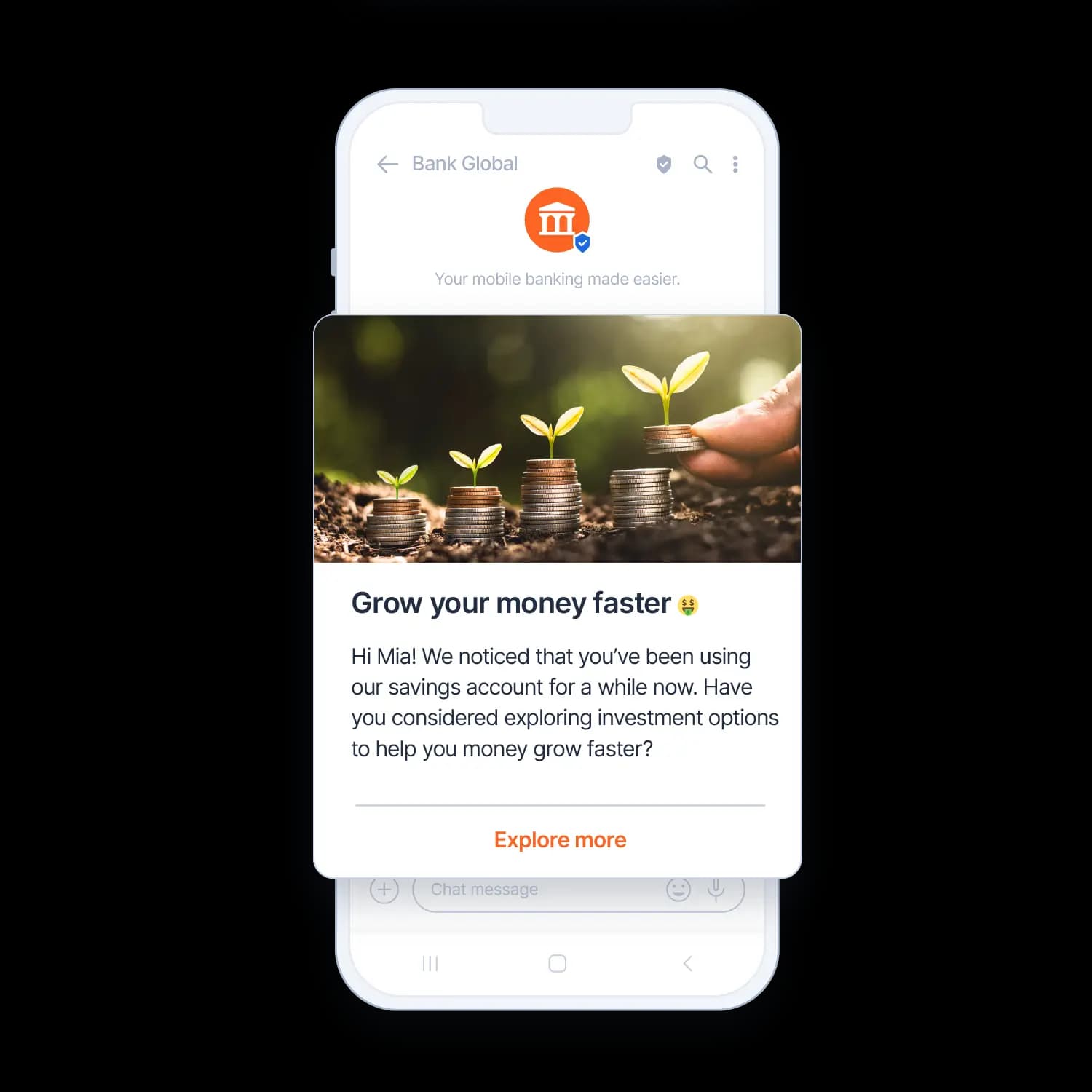
RCS messaging for fintech lets wallets, lending apps, investment platforms, and neobanks send verified, branded messages instead of plain SMS. Account verification, payment reminders, wallet notifications, loan status updates, and KYC prompts go out as rich cards with balances, statuses, and tap-to-act buttons like 'Pay Now' or 'Verify', delivered straight into the user's native Android Messages app with no extra app install needed.
FinTech companies in India need RCS because users often can't tell if a payment or wallet SMS is genuine, which drives support calls and drop-off during KYC and onboarding. RCS shows a verified brand name and logo on every message, lets users complete KYC or pay in one tap instead of guessing at a plain-text prompt, and falls back to SMS automatically on unsupported devices so every user stays reachable.
RCS, Explained for FinTech Companies
RCS (Rich Communication Services) is the modern upgrade to SMS. It lets wallets, lending apps, investment platforms, and neobanks send verified, branded messages with balances, status, and tap-to-act buttons- straight into a user's native Android Messages app, with no app install required. Where RCS isn't supported, delivery automatically falls back to standard SMS.
The Trust Gap in App-First Financial Products
Note on scope: RCS for FinTech is built around app-adjacent flows- wallet top-ups, loan disbursal, investment/SIP alerts, and neobank product updates- distinct from RCS for Banking, which covers traditional bank and branch-style alerts like statements and branch services. The two are designed for different product models even though they share the same underlying RCS infrastructure.
Common Communication Challenges
- Users unsure if a payment/wallet SMS is genuine or a scam
- High KYC and onboarding drop-off from unclear text prompts
- Loan status queries flooding support without self-serve options
- Missed payment reminders leading to late fees and churn
- No easy way to act (pay, verify) directly from an SMS
How RCS Solves These Challenges
- Verified brand name and logo build immediate trust
- One-tap Complete KYC/Pay Now cuts drop-off and support load
- Rich cards present loan/application status clearly
- Automated, trigger-based sending for reminders and milestones
- SMS fallback keeps every user reachable regardless of device
6 High-Impact RCS Use Cases for FinTech Companies
Account Verification
Trigger: New user signs up on a wallet, lending, or investment app and needs identity/OTP verification to activate the account.
RCS format: Rich card: verified app branding, OTP or verification status, 'Verify Now' button linking to the in-app flow.
Result: Higher signup-completion rates than SMS OTP alone, since users trust a verified sender.
Payment Reminders
Trigger: EMI, bill split, or scheduled payment due within the app- customer needs a clear, actionable nudge.
RCS format: Rich card: amount due, due date, linked account/card last 4 digits, 'Pay Now' button.
Result: Faster on-time payment rates and fewer manual follow-up calls than plain-text reminders.
Wallet Notifications
Trigger: Wallet balance credited, debited, or a cashback/reward triggered- user expects instant, trustworthy confirmation.
RCS format: Rich card: transaction amount, updated balance, merchant/source, 'View Wallet' button.
Result: Reduced 'is this transaction genuine?' support queries thanks to verified sender branding.
Loan Updates
Trigger: Loan application progresses through approval, disbursal, or an upcoming instalment milestone.
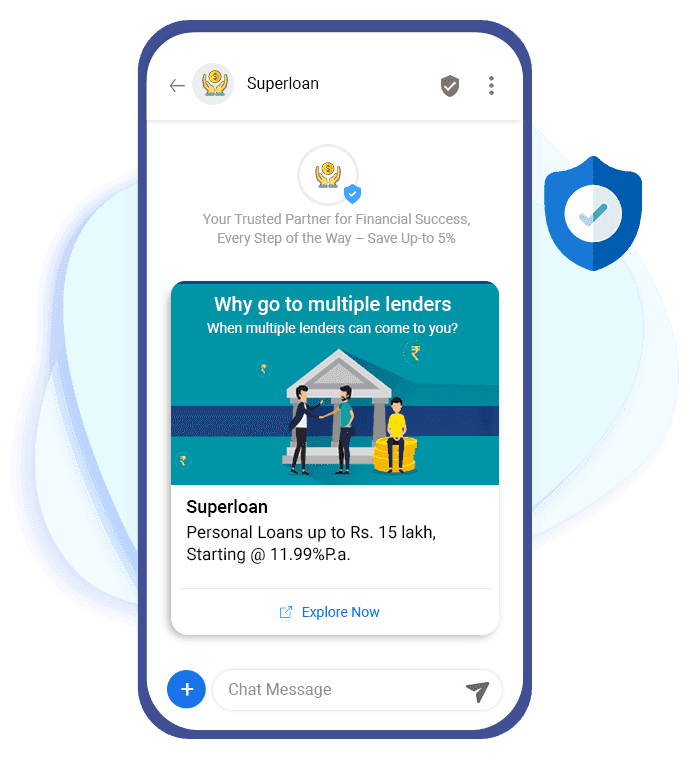
RCS format: Rich card: application/loan ID, current status, next step, 'Track Application' or 'Pay Instalment' button.
Result: Fewer status-check calls to the lending desk and clearer visibility across the loan lifecycle.
Investment Alerts
Trigger: Portfolio milestone, SIP due date, or market-linked alert relevant to the user's holdings.
RCS format: Rich card: portfolio snapshot, alert type, 'View Portfolio' or 'Invest Now' button.
Result: Higher engagement with time-sensitive investment nudges than a plain-text push notification.
KYC Verification
Trigger: Regulatory KYC or re-KYC step pending before a user can transact fully on the platform.
RCS format: Rich card: pending document list, verification status, 'Complete KYC' button to the upload flow.
Result: Lower KYC drop-off and faster completion versus email or plain SMS prompts.
RCS Across the FinTech User Journey
Onboarding
Account verification and KYC completion prompts with status chips.
Activation
Wallet top-up confirmation and first-transaction or SIP-setup nudges.
Usage
Payment reminders, wallet notifications, and loan/instalment updates.
Retention
Investment alerts, portfolio milestones, and re-KYC or renewal prompts.
The RCS Toolkit for FinTech Messaging
Rich Cards
Transaction, loan, and KYC status details with image, text, and action buttons in one message.
Suggested Replies
One-tap 'Pay Now', 'Complete KYC', 'View Portfolio' chips for account actions.
CTA Buttons
'Verify Now', 'Track Application', 'Invest Now'- direct action, no link-click friction.
Carousels
Multi-card product or investment option breakdowns, swipeable in one message.
Business Verification
Google-verified FinTech brand name and logo on every message- reduces fraud-app impersonation risk.
RCS vs Plain SMS for FinTech Communication
| Aspect | SMS | RCS |
|---|---|---|
| Sender identity | Plain number or unverifiable Sender ID | Verified FinTech brand name, logo, and checkmark |
| Message format | 160-character plain text | Rich card with balance, status, and action buttons |
| User action | Requires opening the app manually or clicking a link | Pay, Verify, or Track in one tap |
| DND applicability | Promotional SMS blocked for DND numbers | Not restricted by TRAI DND rules |
RCS vs WhatsApp for FinTech Communication
RCS and WhatsApp are complementary, not competing. For broad, install-free outbound alerts, RCS has a reach advantage.
| Aspect | RCS | |
|---|---|---|
| Reach | Requires the user to have WhatsApp installed and opted in | Works natively in Android's default Messages app- no install or opt-in step |
| Delivery fallback | No native SMS fallback if undelivered | Automatic SMS fallback keeps delivery near-universal |
| Best fit | Two-way support chat, chatbot query resolution | Broad outbound alerts- payments, wallet activity, KYC prompts |
How an RCS Message Flows- Trigger to User Action
Trigger
Payment due, wallet transaction, loan milestone, or KYC step reached in your core platform.
Template match
Get Click Media's API matches the event to the pre-approved rich card template.
Capability check
Platform checks if the user's device supports RCS in real time.
Send
RCS rich card delivered if supported; automatic SMS fallback if not.
User action
User taps Pay Now, Verify, Complete KYC, or Track- routed back to your system.
Reporting
Delivery, read, and response rates tracked in the Get Click Media dashboard.
Illustrative Example: A Digital Lending & Wallet Platform
Note: anonymised, illustrative example built on the patterns Get Click Media has seen from KYC-completion and payment-reminder messaging deployments across FinTech clients- not a single named case study.
Challenge
High KYC drop-off during onboarding and frequent missed EMI/payment due dates.
RCS deployment
Verified 'Complete KYC' and 'Pay Now' rich cards replacing plain-text SMS prompts at each step.
Outcome
Higher KYC completion and more on-time payments than the prior SMS-only journey, within weeks of launch.
Getting Your FinTech Platform Live on RCS
Discovery & use-case mapping
We map your payment, wallet, loan, and KYC workflows to RCS message templates.
Google brand verification
Get Click Media submits your FinTech brand identity documents for Google RBM verification.
Template design & approval
Rich cards, carousels, and suggested replies designed for each use case and submitted for approval.
Core platform/API integration
Connect your wallet, LOS, or investment platform via API or ready-made webhooks.
Pilot & go-live
Run a pilot batch with SMS fallback verified, then scale to full user base.
Simple, Volume-Based RCS Pricing
Pricing is based on message volume and interaction type, and is customised per wallet, lending, or investment platform. All plans include Google brand verification support, SMS fallback, real-time analytics, and API access.
View RCS PricingWhy Indian FinTech Companies Choose Get Click Media for RCS
Fraud-conscious by design
Message payloads carry only what's needed to act- never credentials or full account numbers. India-hosted infrastructure.
Direct carrier integration
Direct Jio, Airtel, and Vi integration for fast delivery and accurate capability detection.
Real-time trigger API
Connects to your wallet, LOS, or investment platform so alerts fire the moment an event occurs.
Dedicated onboarding support
Get Click Media manages Google brand verification and template approval end-to-end.
SMS fallback built in
Every message reaches the user, RCS-capable device or not.
Fast go-live
Most FinTech clients are live within 7-10 business days.


Largest CPaaS partner for FinTech messaging
Get Click Media enables wallets, lending apps, and neobanks to reimagine customer communication with RCS.

One message could
change your business.
Big or small, we power communication for all- talk to us today.
RCS Messaging for Indian FinTech Companies
How is RCS for FinTech different from RCS for Banking?
FinTech content emphasizes app-adjacent flows- wallet top-ups, loan disbursal, investment alerts, neobank product updates- while RCS for Banking centres on traditional bank/branch-style alerts like statements and branch services. Both use the same verified RCS infrastructure, designed around different product models.
Can RCS verify KYC steps for a FinTech app?
Yes. RCS rich cards can guide users through pending KYC steps with a 'Complete KYC' button linking to your in-app or web flow, plus status chips showing what's remaining- reducing drop-off compared to a plain SMS or email reminder.
Is RCS secure enough for wallet transaction notifications?
Yes. Every RCS message carries Google-verified sender branding, so users can distinguish genuine wallet alerts from spoofed SMS. Get Click Media never embeds sensitive account numbers or credentials in message payloads, only the minimum context needed to act.
Can loan updates be automated end-to-end via RCS?
Yes. Loan application, approval, disbursal, and instalment-due events can each trigger a dedicated rich card with status and a relevant action button, cutting manual status-check calls to your lending or collections desk throughout the loan lifecycle.
Does RCS require TRAI DLT registration for FinTech companies?
No. RCS is not classified as commercial SMS under TRAI regulations, so FinTech companies don't need DLT entity or template registration for RCS content. Google brand verification is required instead, which Get Click Media manages end-to-end during onboarding.
What happens if a user's device doesn't support RCS?
Get Click Media's platform checks device capability in real time and automatically falls back to SMS for users whose devices don't support RCS, ensuring payment reminders and account alerts reach every user regardless of device.
Can RCS support investment and SIP-related alerts?
Yes. Portfolio milestones, SIP due dates, and market-linked alerts can be sent as rich cards with a portfolio snapshot and a 'View Portfolio' or 'Invest Now' button, driving higher engagement than plain-text push notifications.
How long does it take to launch RCS for a FinTech company?
Most FinTech clients go live within 7-10 business days, covering Google brand verification, template approval, and integration with the wallet, lending, or investment platform generating the underlying events.
Explore RCS for Other Industries
Ready to deploy RCS for your FinTech platform?
Get Click Media handles Google brand verification, template approval, and platform integration. Most FinTech clients are live within 7-10 business days.